
Tips for First Time in Bali: What I Wish Someone Had Told Me Before My First Trip
This post contains affiliate links. If you book through them, we earn a small commission at no extra cost to you.
Your first trip to Bali is going to be wonderful — but there’s a handful of things every first-timer wishes they’d known before landing, from the visa queue to the scooter you probably shouldn’t rent on day one. Learn them now, and you’ll skip the rookie mistakes and get straight to the good part.
Before You Go: The Essentials
A great first trip to Bali starts before you leave home, and getting a few tips for first time in Bali sorted in advance saves a lot of arrival-day stress.
First, sort your visa. Most visitors need a visa on arrival, and applying for the electronic version (e-VOA) online before you fly lets you skip the airport payment queue and use the faster e-gates — our visa on arrival at Bali guide walks through exactly how. While you’re at it, pay the mandatory Bali tourist levy online and complete the customs declaration form, both covered in our Bali entry requirements guide.
Second, check your passport has at least six months validity from your arrival date and a couple of blank pages — airlines enforce this and will deny boarding if you don’t meet it. Third, get travel insurance that covers scooter riding and any activities you plan, since this is the single most overlooked essential — our travel insurance Bali guide explains why it matters so much. Finally, decide roughly when you’re going based on weather and crowds; our best time to travel to Bali guide breaks down the seasons.
Get these few things handled in advance and you’ll arrive relaxed instead of scrambling.
Money and Costs
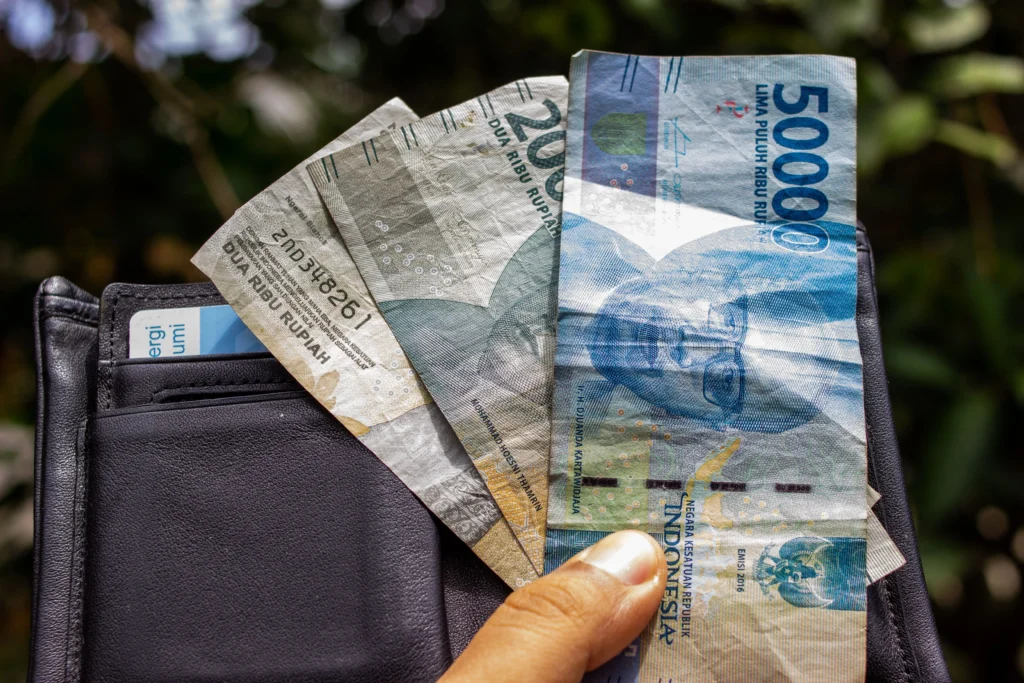
Bali runs largely on cash, and understanding the money situation early saves headaches. The currency is the Indonesian rupiah (IDR), and the numbers are large — you’ll quickly be a millionaire, since a decent meal might cost 100,000 IDR and a night’s accommodation several hundred thousand. It takes a day to stop mentally fumbling the zeros.
Withdraw cash from ATMs attached to reputable banks rather than standalone machines, and be aware many ATMs charge a withdrawal fee and have daily limits. Take note of the daily limit and withdraw larger amounts less often to minimize fees. Avoid street money changers entirely — the sleight-of-hand scams are real — and use official exchange counters or ATMs instead, as our is Bali safe guide covers.
On costs overall: Bali can suit almost any budget. Budget travelers can get by on $30–$50 a day, mid-range travelers $60–$120, and there’s no upper limit at the luxury end. Cards are accepted at upscale restaurants, hotels, and shops, but you’ll need cash for warungs, markets, small vendors, parking, temple donations, and most scooter-related costs. Always carry some cash, and keep small denominations handy.
Getting Around Bali
Transport is one of the things first-timers most underestimate, partly because Bali is bigger and slower to cross than the map suggests. Distances that look short can take an hour or more thanks to traffic, especially in the south.
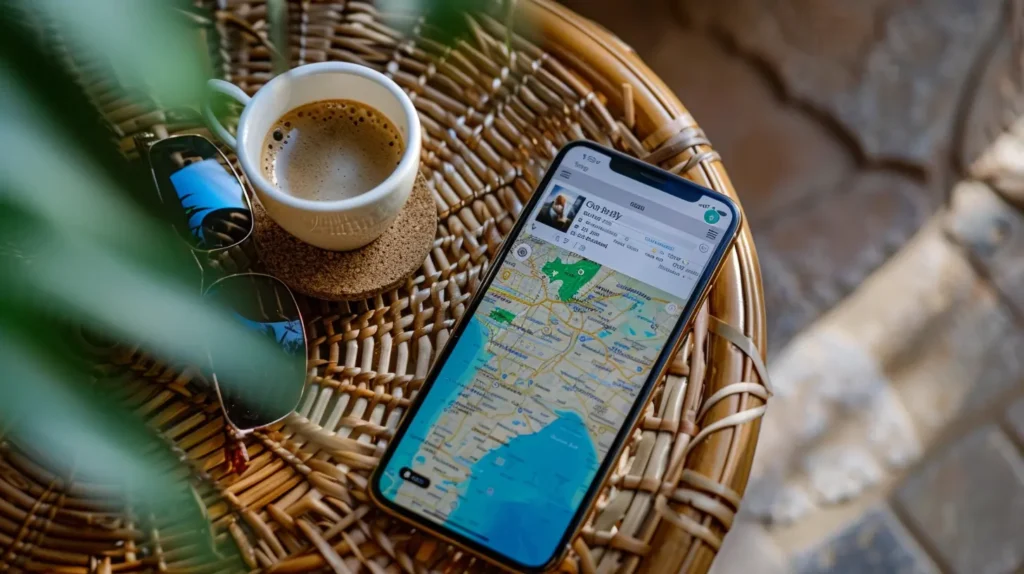
The ride-hailing apps Grab and Gojek are your best friends — cheap, reliable, and they remove all the fare-haggling of street taxis. Download both before you arrive. For metered taxis, Bluebird is the trustworthy name; avoid unmarked taxis that approach you, which routinely overcharge. For longer trips and day tours, hiring a private driver for the day is affordable and lets you cover multiple sights comfortably.
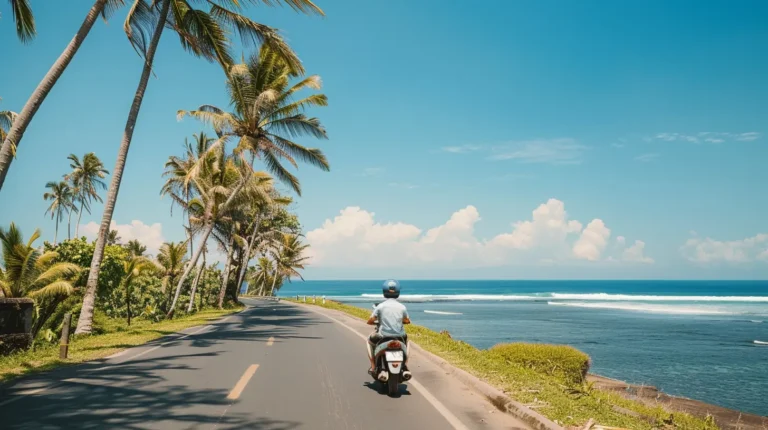
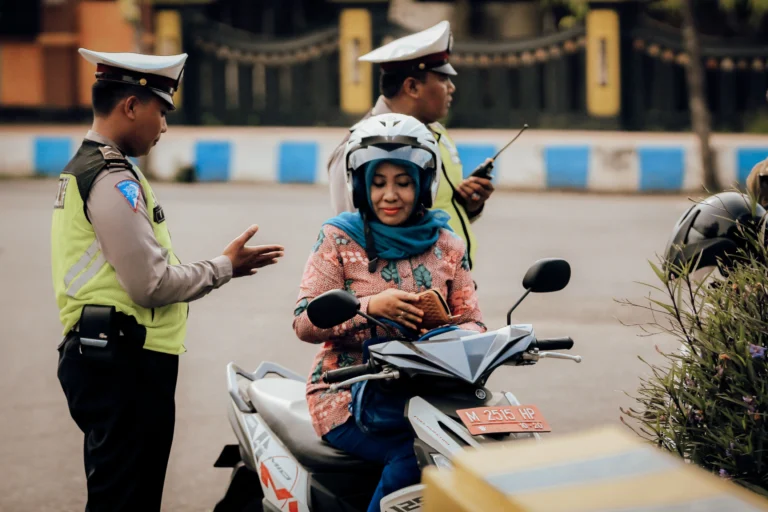
On scooters: they’re the iconic way to get around Bali and give you real freedom, but they’re also the most common way tourists get hurt. If you’re not an experienced rider, your first day in Bali is not the time to learn on chaotic, unfamiliar roads. If you do ride, wear a helmet always, make sure you have a proper license and that your insurance covers it, and never ride after drinking. Our is Bali safe guide goes deeper on this.
Where to Base Yourself
One of the most important first-timer decisions is where to stay, because Bali’s areas are genuinely different and the right base shapes your whole trip. Many first-timers make the mistake of trying to do everything from one base, then spending half the trip in traffic.
The smarter approach is to split your stay between two or three areas. A classic first-timer combination is a few nights in Ubud for culture, rice terraces, and temples, then a few nights in a southern beach area like Seminyak or Canggu for the coast and nightlife. This cuts down on long daily commutes and lets you experience the island’s contrasts.
Quick orientation: Ubud is the cultural heart, surrounded by rice fields and jungle — see our where to stay in Ubud guide. Seminyak is polished, with the best restaurants, beach clubs, and shopping — covered in our Seminyak travel guide. Canggu is the relaxed, surf-and-nomad scene — see where to stay in Canggu. Uluwatu offers clifftop drama and surf, and Nusa Dua is calm, family-friendly resort territory. Pick two that match your interests rather than trying to cram in all five.
Culture and Etiquette
Bali is a deeply spiritual, predominantly Hindu island, and a little cultural awareness goes a long way — both out of respect and to enrich your experience. The Balinese are warm and welcoming, and showing respect for their customs is genuinely appreciated.
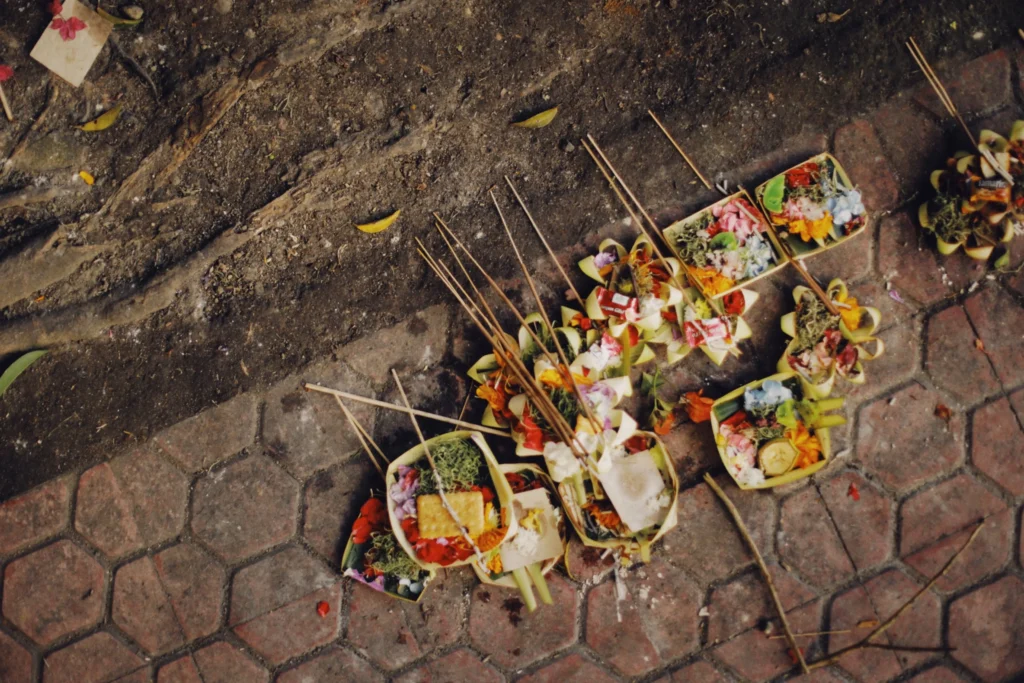
A few key things: dress modestly when visiting temples, covering shoulders and knees, and wear a sarong (usually available to borrow at temple entrances). You’ll see small woven offerings called canang sari placed on the ground and on shrines everywhere — step around them, never on them. Use your right hand for giving and receiving, as the left is considered impure. Remove your shoes when entering homes and certain temple areas, and ask before photographing people or ceremonies.
During temple ceremonies and the Day of Silence (Nyepi), respect the local customs and any restrictions. A respectful, curious attitude opens doors — many travelers find that engaging genuinely with Balinese culture, rather than treating it as a backdrop, becomes the most memorable part of their trip.
Staying Healthy and Safe
A few health and safety basics make a big difference for first-timers. Drink only bottled or filtered water — never tap water, and use bottled water even for brushing your teeth. This is the main defense against Bali belly, the common traveler’s stomach upset our what is Bali belly guide covers in full. Be sensible with food early in your trip while your system adjusts, eat at busy places with high turnover, and carry hand sanitizer.
The biggest genuine safety risk in Bali isn’t crime — it’s scooter accidents, so the transport advice above matters. Petty theft, mainly phone snatching, is the most common crime, so keep your phone secure near roads and don’t dangle bags on the traffic side. Violent crime against tourists is rare. Our is Bali safe guide gives the honest, full picture.
Pack a small health kit (rehydration salts, hand sanitizer, basic medications, mosquito repellent), use sun protection diligently in the strong tropical sun, and respect the ocean — many beaches have strong currents, so swim where it’s flagged safe. None of this should make you anxious; it’s just sensible preparation that keeps a first trip smooth.
Food and Eating
Bali’s food is one of its great joys, and first-timers should dive in — thoughtfully. The local warungs (small family-run eateries) serve delicious, authentic Indonesian food at very low prices — a plate of nasi campur might cost a couple of dollars and be the best meal of your day. Don’t be intimidated by them; eating at busy warungs is part of the experience and often safer than tourist spots precisely because of the high turnover.
Must-try dishes include nasi goreng (fried rice), mie goreng (fried noodles), satay, babi guling (suckling pig), and fresh tropical fruit. Bali also has an exceptional international and healthy food scene, especially in Ubud, Seminyak, and Canggu, with world-class cafes and restaurants.
A couple of practical food tips: ease into spicy food and unfamiliar dishes in the first day or two while your stomach adjusts, be a little cautious with raw vegetables and ice in very budget spots early on, and always carry cash since most warungs don’t take cards. Beyond that, eat widely and adventurously — the food is a highlight, and being too cautious means missing one of the best parts of Bali.
Mistakes First-Timers Make
A few mistakes come up again and again, and all are easily avoided.
Trying to see the whole island from one base. Bali is bigger and slower than it looks; pick two or three areas and split your stay. Underestimating travel times. What looks like a short hop on the map can be an hour-plus in traffic, so plan realistically and don’t over-pack your days.
Renting a scooter on day one without experience. The most common way first-timers get hurt; if you’re not confident, use Grab and Gojek instead. Not carrying enough cash. So much of Bali is cash-only, and getting caught short at a warung or temple is a regular rookie error. Drinking tap water or being careless with food early on, leading to an avoidable bout of Bali belly.
Skimping on travel insurance, or buying a policy that doesn’t cover scooters. Not respecting cultural customs, especially at temples. And finally, over-scheduling — trying to cram every famous sight in and leaving no time to simply enjoy the island’s pace, which is often what people end up loving most.

My Personal Tips for Your First Bali Trip
I still remember my own first trip to Bali and the small things that tripped me up, so here’s what I’d genuinely tell a friend going for the first time.
Don’t try to do too much. My biggest first-trip mistake was cramming in every famous sight and spending half my days stuck in traffic, exhausted. The trips I’ve loved most since are the ones where I picked two areas, slowed down, and left room to wander. Bali rewards unhurried time more than ticking off a checklist — some of my best memories came from an aimless morning, not a packed itinerary.
Get the boring admin done before you fly. Sorting my e-VOA, tourist levy, and insurance in advance turned my later arrivals into a breeze compared to my first trip, when I queued for ages and stressed about paperwork. Ten minutes of prep at home is worth an hour saved at a tired, jet-lagged arrival.
Eat at the warungs, and start early in the mornings. The cheapest meals were consistently among my best, and the early hours — quiet beaches, soft light, cafes before the crowds — are the version of Bali most first-timers sleep through. Set an alarm at least a couple of mornings; you won’t regret it.
And don’t stress about doing it perfectly. I made plenty of first-trip mistakes and still had an incredible time — Bali is forgiving, warm, and easy to love. Prepare the essentials, stay aware, treat the culture with respect, and then let yourself relax into it. For the deeper dives on everything mentioned here, our best time to travel to Bali, Bali entry requirements, and is Bali safe guides have you fully covered.
👉 Find and book your first Bali stays on Hotels.com
👉 Browse the best Bali tours and experiences for first-timers on Viator