
Transportation Guide in Bali: How to Get Around Without Losing Your Mind (or Your Money)
This post contains affiliate links. If you book through them, we earn a small commission at no extra cost to you.
Getting around Bali is the thing nobody warns you about until you’re sweating in a stationary scooter jam wondering why a “20-minute drive” took 90. The island has a dozen ways to move, each with its own catch — and knowing which to use when is the quiet skill that makes or breaks a trip. Here’s the full breakdown.
How Transport in Bali Actually Works
Here’s the first thing to understand for any transportation guide in Bali: there’s no real public transport system the way you might expect. No metro, no reliable bus network for tourists, no trains. Getting around Bali means choosing between scooters, ride-hailing apps, private drivers, taxis, and the occasional fast boat to the islands — and the right choice depends heavily on where you’re going and how far.
The second thing to internalize is that Bali is bigger and slower than it looks. Distances that seem short on a map can take far longer in reality because of traffic, narrow roads, and the island’s geography. A trip from the southern beaches up to Ubud might be 30 kilometers but take well over an hour. The south in particular — Seminyak, Canggu, Kuta — suffers from genuine congestion, especially at peak times.
Once you accept those two realities, getting around becomes manageable. The trick is matching the transport method to the journey: short hops, day trips, island crossings, and airport runs each have a best option. This guide breaks down every method honestly — costs, pros, cons, and when to use each.
Ride-Hailing Apps: Grab and Gojek
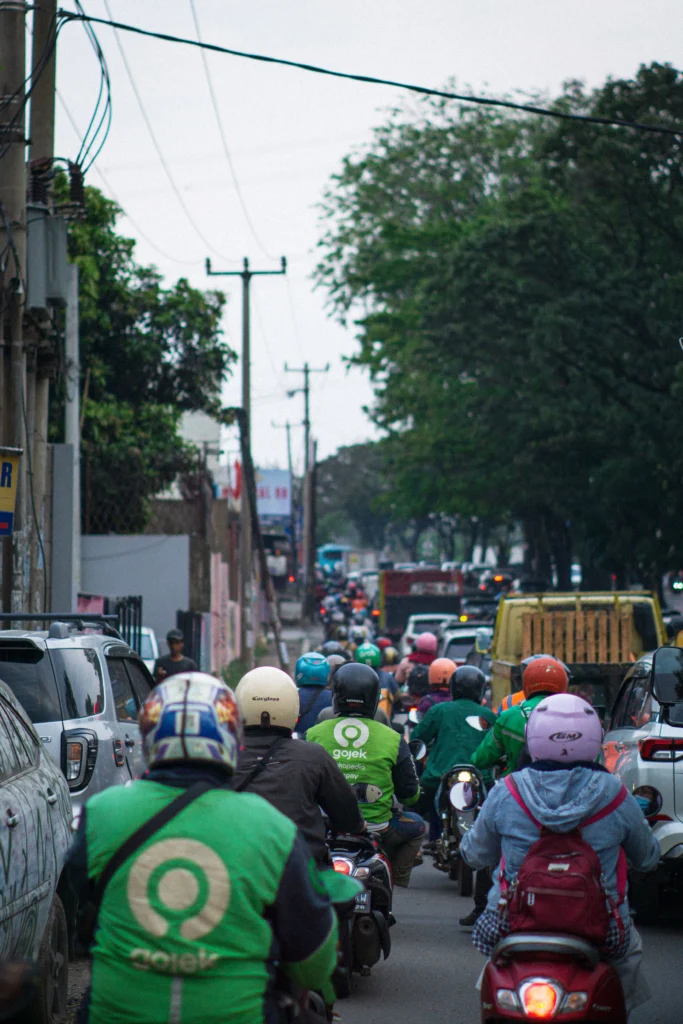
For most travelers, the ride-hailing apps Grab and Gojek are the single best transport solution in Bali, and the first thing I’d tell anyone to download before they arrive. They work like Uber, you set your pickup and destination, see the price upfront, and pay either in cash or through the app. No haggling, no meter games, no overcharging.
Both apps offer cars and motorbike taxis (a driver picks you up on their scooter, which is cheaper and faster through traffic, though obviously only for solo travelers comfortable on the back of a bike). Prices are remarkably cheap by Western standards, a 20-minute car ride might cost just a few dollars. The apps are reliable across the main tourist areas in the south and Ubud.
There are a couple of catches worth knowing. In some areas, particularly around certain markets, beaches, and taxi-association strongholds, local drivers have resisted the apps, and you’ll see signs saying app pickups aren’t allowed there. In those spots, you may need to walk a short distance to a pickup point, or your driver may ask you to meet them around the corner. Coverage is also thinner in remote north and east Bali. But for everyday getting around in the populated areas, Grab and Gojek are cheap, safe, and genuinely the easiest option.
Hiring a Private Driver
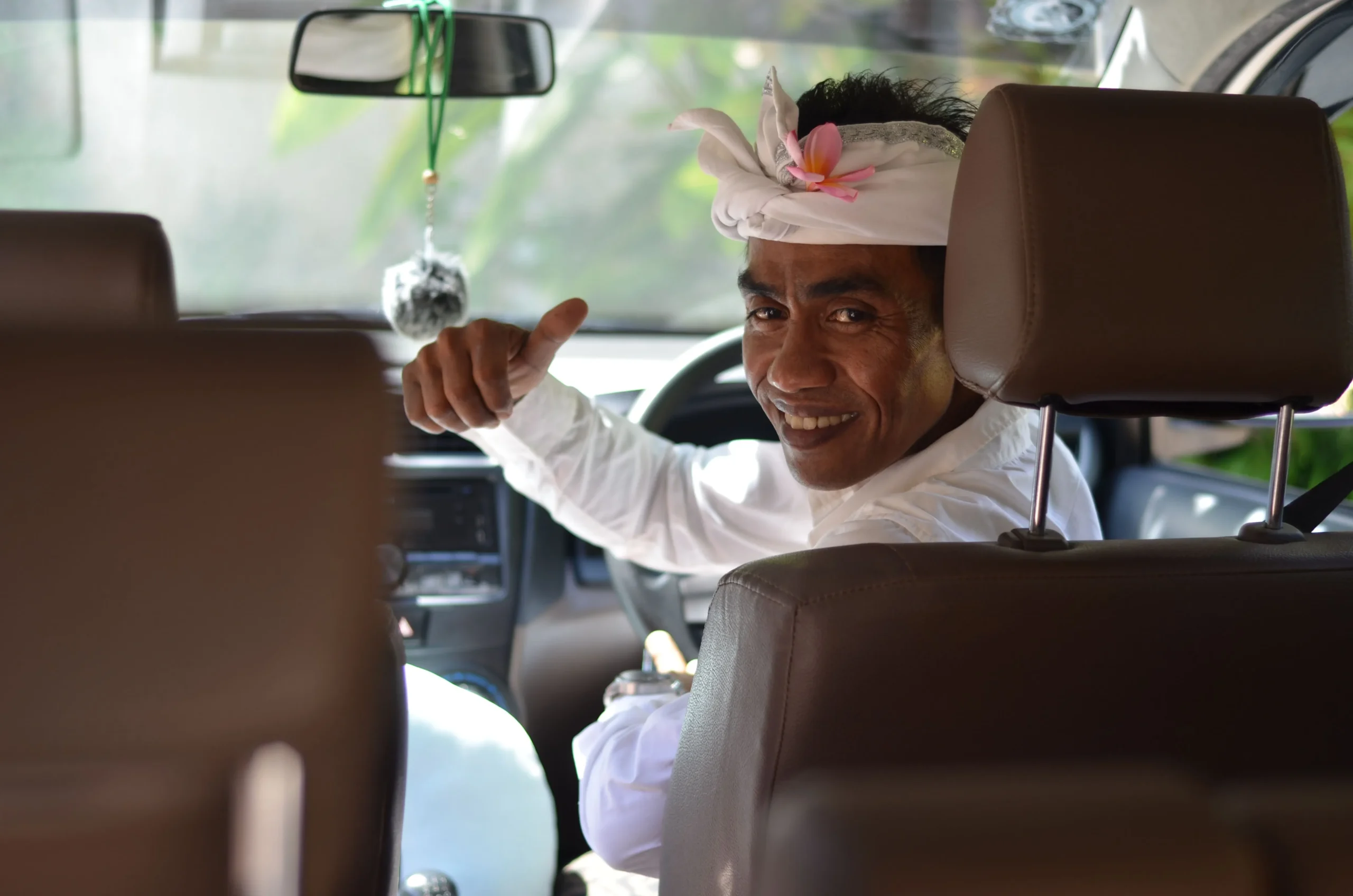
For day trips and sightseeing, hiring a private driver for the day is one of the best-value and most comfortable ways to get around Bali, and a favorite among travelers who want to see multiple sights without the stress of driving themselves.
For a flat daily rate, typically very reasonable, often in the range of $40–$60 USD for a full day depending on distance — a driver picks you up, takes you wherever you want to go, waits while you explore, and brings you home. It’s ideal for combining several attractions in a day: rice terraces, temples, and waterfalls in one Ubud-area loop, for example, or a trip out to Uluwatu for the temple and sunset. You get air conditioning, local knowledge, and zero navigation or parking hassle.
Drivers are easily arranged through your accommodation, which is often the most reliable route, or through reputable tour operators. A good driver becomes an informal guide, sharing local context and recommending stops you wouldn’t have found. For sightseeing days, comfort, and covering ground, this is my most-recommended option — especially for families, groups (the per-person cost drops sharply), or anyone not comfortable on a scooter. Many of the day tours on Viator effectively bundle a driver-guide with a planned itinerary.
👉 Browse private driver day tours and excursions on Viator

Renting a Scooter
The scooter is the iconic Bali transport method, and for good reason — it’s cheap (around $5–$8 USD a day), gives you total freedom, and lets you reach places cars can’t easily go, like the narrow gang lanes and back roads where some of the best discoveries hide. For confident riders, it transforms a Bali trip.
But honesty matters here, because this is also the most dangerous transport choice in Bali. Scooter accidents are the most common way tourists get hurt on the island. The roads can be chaotic, surfaces uneven, traffic unpredictable, and many tourists ride without proper experience, a license, or sometimes even a helmet.
If you’re going to rent a scooter, do it properly. Wear a helmet every single time, even for two-minute trips. Make sure you have a valid motorcycle license — and crucially, that your travel insurance actually covers scooter riding (many policies don’t unless you meet specific conditions, as our travel insurance Bali guide explains in detail). Ride defensively, avoid riding at night on unfamiliar roads, never ride after drinking, and don’t learn to ride for the first time on Bali’s roads. Check the scooter over before renting (brakes, lights, tires), photograph any existing damage, and keep the rental agreement. If you’re not a confident, experienced rider, stick to Grab and Gojek — the small saving isn’t worth the risk. Our is Bali safe guide covers scooter safety further.
Taxis in Bali
Traditional metered taxis still operate in Bali, and the one trustworthy name to remember is Bluebird (the official Blue Bird Group, with the bluebird logo). Their taxis are metered, reliable, and a fair option when you can’t or don’t want to use an app.
The problem is the many imitators and unmarked taxis that prey on tourists — vehicles that approach you outside restaurants, clubs, and tourist spots, often refusing to use the meter and quoting inflated flat fares. Some even mimic the Bluebird color scheme to fool visitors. The rule: only use clearly marked official Bluebird taxis (the genuine logo and company name), insist on the meter, and avoid any taxi that approaches you on the street or refuses to meter.
Honestly, in the app-covered areas, Grab and Gojek are usually cheaper and remove all the meter and fare uncertainty, so I default to them. Taxis are most useful as a backup in areas where the apps face pickup restrictions, or for quick street hails when you don’t want to wait for an app car.

Renting a Car
Renting a car to drive yourself is possible in Bali but less common among tourists, and worth weighing carefully. The upside is comfort, air conditioning, security for belongings, and good for families or groups carrying luggage or wanting to cover long distances independently.
The downsides are significant for most visitors, though. Bali’s traffic is intense and the driving style is very different from Western norms — assertive, fluid, and full of scooters weaving everywhere. Parking in busy areas is difficult, navigation can be confusing, and you’ll need an International Driving Permit alongside your home license. Given how affordable a private driver is, many travelers find that hiring a driver costs little more than self-driving once you factor in fuel and stress, while removing all the hassle.
My take: unless you specifically want the independence of self-driving and you’re comfortable with chaotic conditions, a private driver is usually the better value and far less stressful choice for getting around Bali by car. Self-drive makes most sense for longer, quieter routes in the north and east where traffic eases.
Getting to the Islands: Ferries and Fast Boats
Some of Bali’s best experiences are on the surrounding islands — Nusa Penida, Nusa Lembongan, and the Gili Islands — and reaching them means a fast boat (or ferry). These depart mainly from Sanur (for the Nusa islands) and Padangbai or Serangan (for the Gilis and Lombok).
Fast boats are the usual choice for tourists — quicker and more frequent than the larger public ferries, though pricier. The crossing to Nusa Penida from Sanur takes around 30–45 minutes; the Gili Islands are a longer crossing of a couple of hours. Book through reputable operators, ideally in advance during peak season, and be aware that crossings can be rough or occasionally cancelled in poor weather, particularly in the wet season when seas are choppier — our best time to travel to Bali guide covers the seasonal sea conditions.
A few practical notes: boats can be delayed, so don’t schedule a tight onward connection; luggage is loaded onto the boat (keep valuables on you); and the boarding process at some beaches involves wading to the boat, so wear appropriate footwear. For day trips to Nusa Penida, a guided tour that bundles the boat, transport, and itinerary is often the easiest approach.
👉 Book island day trips and fast boat transfers on Viator
Airport Transport
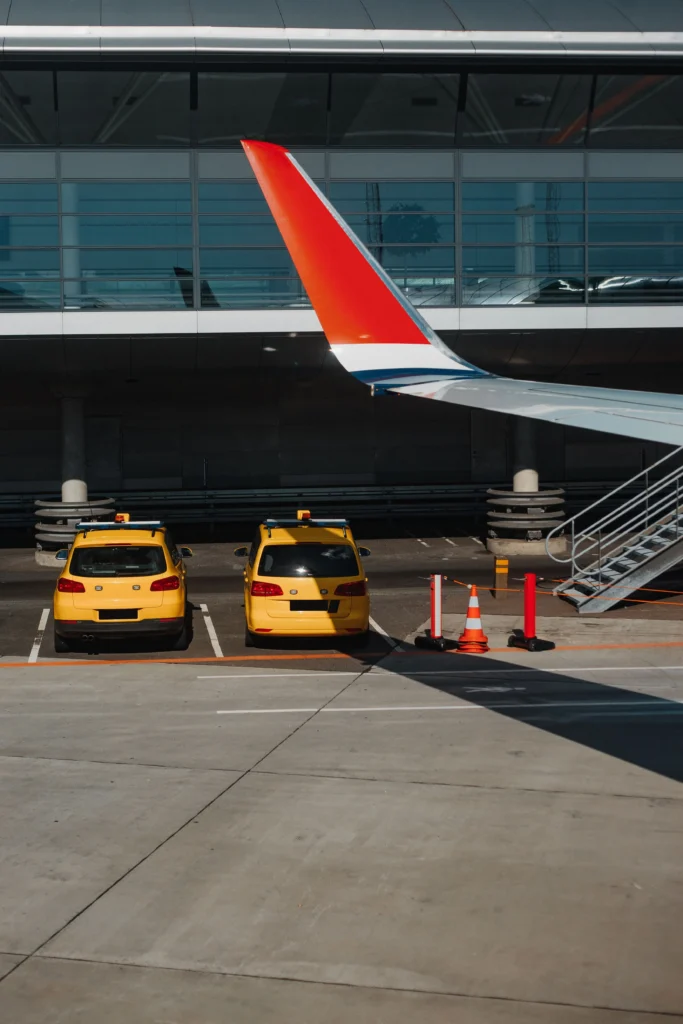
Getting from Ngurah Rai International Airport (DPS) to your accommodation is the first transport decision of your trip, and a few options exist. The simplest and most stress-free, especially after a long flight, is arranging an airport transfer in advance through your hotel or a transfer service — a driver waits with your name, helps with luggage, and takes you straight to your accommodation for a fixed price with no negotiation.
The official airport taxi counter is a reliable option too, offering fixed fares by zone — pay at the counter and avoid touts. Grab and Gojek also operate at the airport, though there are designated pickup points (sometimes a short walk from the terminal) due to the same taxi-association tensions, so check the app for where to meet your driver.
Avoid the drivers who approach you inside or just outside the terminal offering rides — these are the touts who overcharge. Fares from the airport vary by destination: the southern areas (Kuta, Seminyak) are close and cheap, while Ubud or Uluwatu are longer, pricier transfers. Having your transfer pre-arranged or knowing the official counter fare protects you from arrival-day overcharging when you’re tired and disoriented.
Transport Costs at a Glance
To help you budget, here’s a rough guide to what each option costs (prices vary by distance, season, and negotiation):
Grab/Gojek car rides: typically a few dollars for short-to-medium trips in the south. Grab/Gojek motorbike: even cheaper, often a dollar or two. Private driver for a full day: around $40–$60 USD depending on distance and itinerary. Scooter rental: roughly $5–$8 USD per day, less for longer rentals, plus cheap fuel. Bluebird metered taxi: comparable to or slightly more than Grab, depending on traffic.
Fast boat to Nusa Penida: varies by operator, generally moderate for a return ticket. Airport transfer: a fixed fee depending on your destination zone, cheapest to the nearby southern areas. Car rental: a daily rate plus fuel, insurance, and the hassle factor.
The overall picture: transport in Bali is cheap by Western standards, and even daily private drivers are affordable. The main cost is time lost to traffic rather than money, so plan routes and timing smartly.
Scams and Safety to Know About
A few transport-related scams and safety issues are worth knowing so you can sidestep them, all covered more broadly in our is Bali safe guide.
The most common is the unmarked or fake taxi that refuses the meter and overcharges stick to official Bluebird taxis or the apps. Fuel scams happen with roadside petrol vendors selling diluted or short-measured fuel, so use official Pertamina stations for scooters and cars. At the airport, ignore the touts and use pre-arranged transfers or the official counter.
On safety: the scooter risk is the big one, addressed above helmet, license, insurance, defensive riding, no night rides on unfamiliar roads. For any transport at night, registered apps or official taxis are safer than walking along poorly lit roads. Keep valuables secure in vehicles and on boats, and on scooters never leave bags dangling on the traffic side where phone-and-bag snatching can occur.
None of this should make you anxious, Bali transport is generally safe and easy once you know the patterns. Awareness handles almost all of it.
My Personal Tips for Getting Around Bali
After many trips and every mode of transport the island offers, here’s what I’d genuinely tell a friend about getting around Bali.
Download Grab and Gojek before you even land. They’ve saved me more money, time, and fare-arguments than anything else, and they’re my default for everyday getting around in the south and Ubud. The upfront pricing alone removes the single most stressful part of transport here.
For sightseeing days, hire a driver, it’s the best value in Bali transport. I resisted this on my first trip thinking it was an indulgence, then realized a full day with a driver costs less than a couple of taxi rides back home, removes all the navigation and parking stress, and turns the driver into an informal guide. For temples, rice terraces, and Uluwatu sunsets, this is how I do it now, every time.
Be honest with yourself about scooters. I love the freedom of a scooter and I also know the roads here are no place to learn. If you’re an experienced rider, go for it helmet on, insurance confirmed. If you’re not, the small saving genuinely isn’t worth the risk, and Grab will get you there for a few dollars without the road rash.
Build in way more time than the distance suggests. My biggest early mistake was trusting the map’s “30 minutes” and packing my days too tight. Now I assume everything takes longer, plan fewer stops, and enjoy them more. Bali traffic is the real cost of getting around — plan for it and you’ll be relaxed instead of frustrated.
For everything else you’ll need, our tips for first time in Bali, Bali entry requirements, and is Bali safe guides round out the practical picture, and the complete Bali travel guide ties it all together.
👉 Find well-located Bali accommodation to minimize transport time on Hotels.com
👉 Book private drivers, day trips, and island transfers on Viator