Rice Terrace Ubud: Finding the Green Magic Without the Tour-Bus Crowds
This post contains affiliate links. If you book through them, we earn a small commission at no extra cost to you.
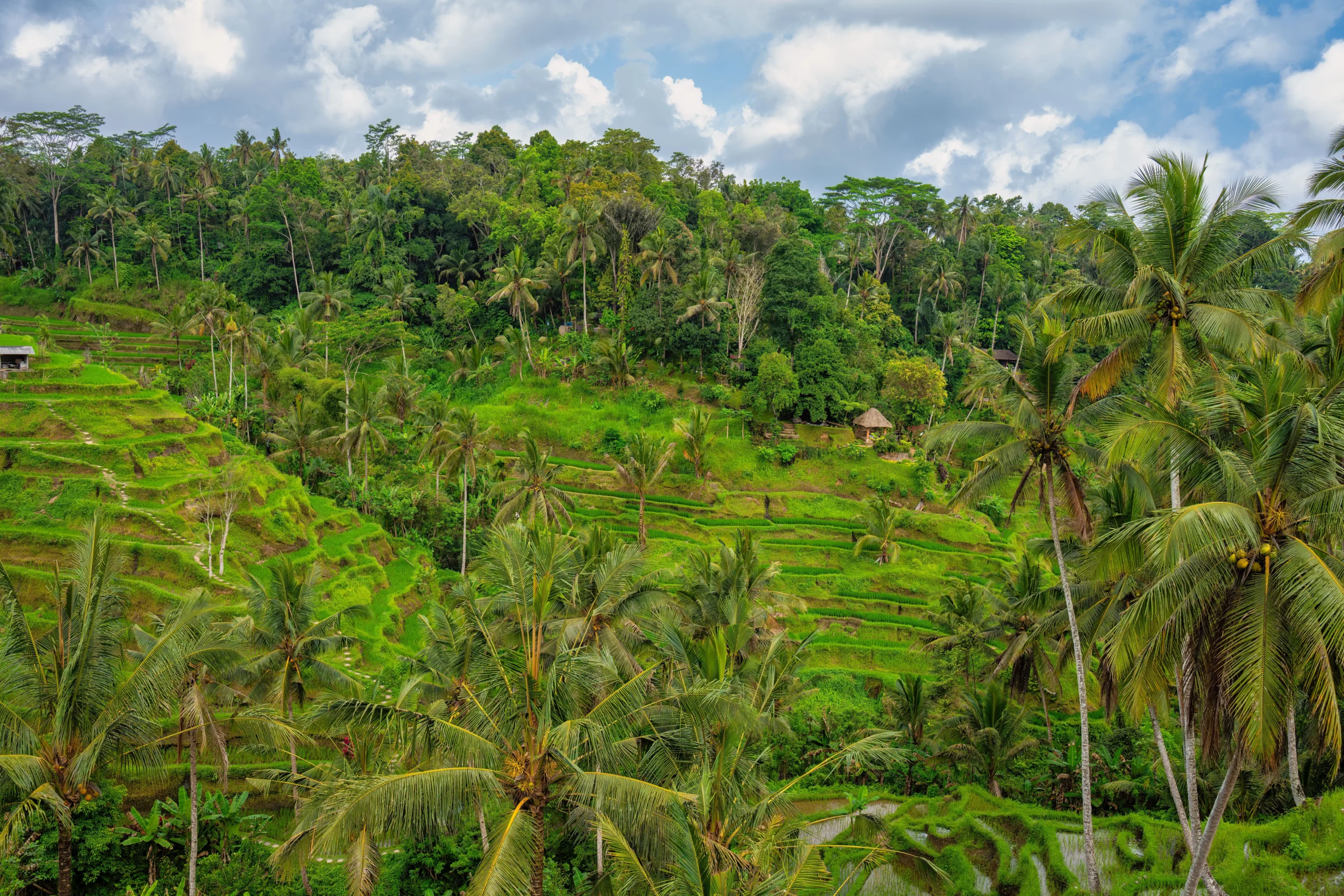
Everyone comes to Ubud with the same image in their head: impossibly green steps of rice cascading down a hillside, glowing in the morning light. The good news is it’s real. The catch is that the most famous one is also the most crowded — and a little know-how is the difference between a magic morning and a tourist scrum. Here’s how to do the rice terraces right.
Why the Ubud Rice Terraces Are Worth It
The rice terrace Ubud experience is one of those rare travel moments that genuinely lives up to the photographs. Carved into the hillsides over centuries and fed by an ancient communal irrigation system called subak — a UNESCO-recognized tradition that dates back more than a thousand years — these cascading green paddies are the postcard image of Bali for good reason.
But there’s more to them than a pretty view. The terraces are working farmland, tended by local families using methods passed down through generations, and understanding that turns a quick photo stop into something more meaningful. Walking the narrow paths between the paddies, watching farmers move through the rows, seeing the water move through the channels exactly as it has for centuries — it’s a window into the Bali that existed long before the cafes and yoga studios arrived.
This guide covers the famous Tegallalang terraces, the quieter alternatives most tourists never find, the swings and photo spots, and crucially how to time your visit so you experience the magic rather than the crowds.
Tegallalang Rice Terrace
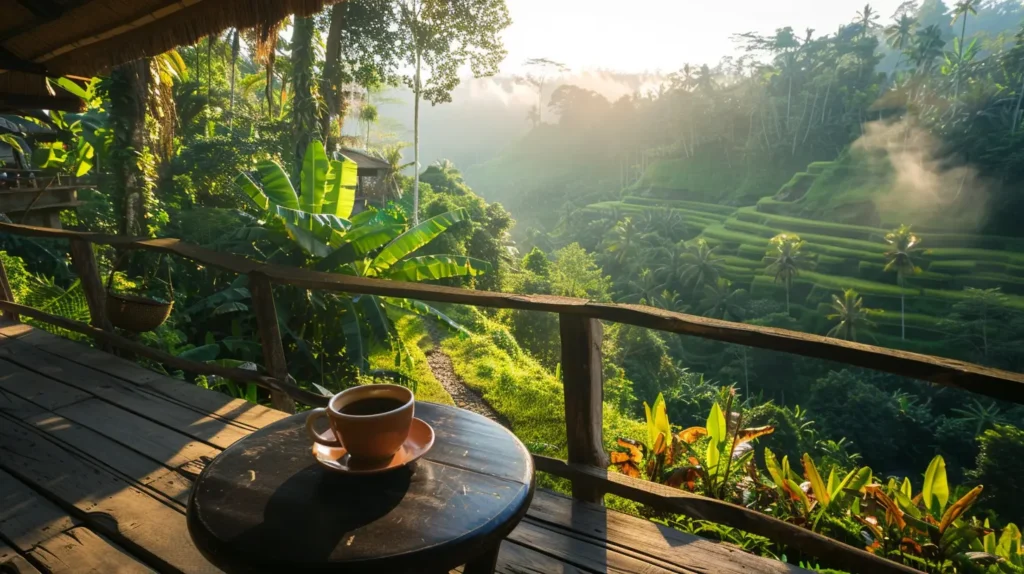
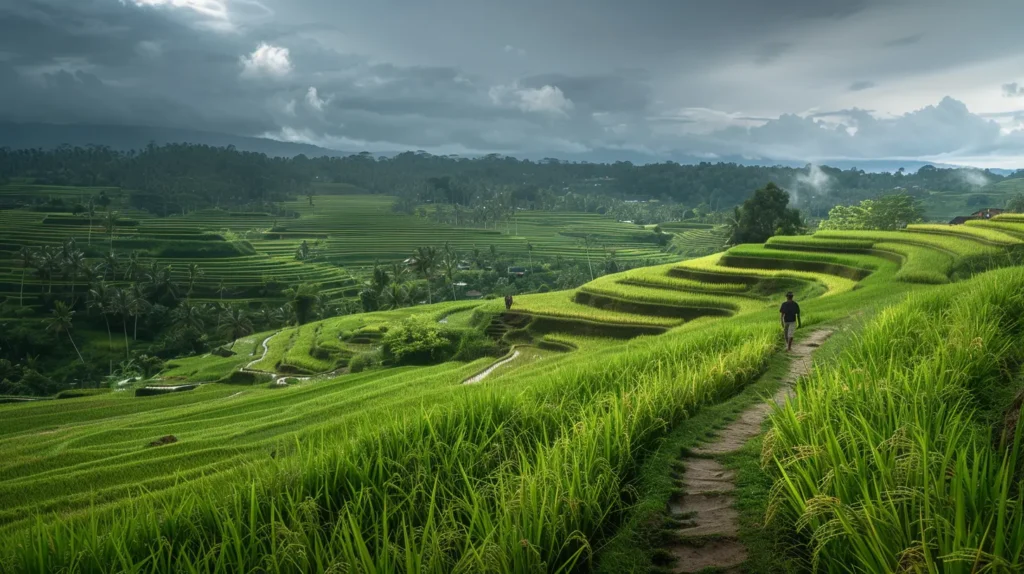
The Tegallalang Rice Terrace is the most famous and most visited rice terrace near Ubud, about 20 minutes north of the town center. It’s the one you’ve seen in every Bali photo — the dramatic, steeply terraced valley with paddies stacked up both sides and palm trees scattered throughout. In person, it more than holds up.
The site has been developed for visitors over the years, which is both good and bad. On the plus side, there are walking paths down into and across the terraces, cliffside cafes with stunning views, and the famous swings. On the downside, it gets genuinely crowded — the day-trip vans arrive from Seminyak, Canggu, and the cruise ports by mid-morning, and by 11 AM the narrow paths can be a slow shuffle of people.
The way to enjoy Tegallalang is to beat that wave. Arrive between 7 and 9 AM and you’ll have the soft morning light, cooler temperatures, and far fewer people — the difference is night and day. There’s usually a small donation requested at various points along the paths (a dollar or two is normal and fair, as the money supports the farmers whose land you’re walking through). Wear shoes with grip, because the terrain is uneven and can be slippery.
👉 Book a Tegallalang rice terrace guided tour on Viator
Other Rice Terraces Near Ubud
If you want the rice terrace magic without the Tegallalang crowds, a few alternatives are well worth the extra effort.
Jatiluwih is the big one — a vast UNESCO World Heritage rice terrace landscape about 90 minutes from Ubud, in the highlands toward Mount Batukaru. It’s far larger and far less crowded than Tegallalang, with walking trails of varying lengths winding through genuinely working farmland. The scale is the appeal: where Tegallalang is a dramatic valley, Jatiluwih is rolling green terraces as far as you can see. For anyone who wants to walk and soak it in rather than photograph and move on, it’s the better choice.
Tegunungan and the smaller terraces scattered around the Ubud countryside offer quieter glimpses of paddy life without any entrance setup at all — these are the ones you stumble on while exploring the back roads by scooter, with farmers working and not a tour van in sight.
The countryside around Penestanan and Campuhan, just west of central Ubud, also has accessible rice fields you can walk to directly — the Campuhan Ridge Walk in particular passes through beautiful open paddy land and is free, uncrowded at dawn, and walkable from town. Our things to do in Ubud guide covers that walk in detail.
The Famous Bali Swings
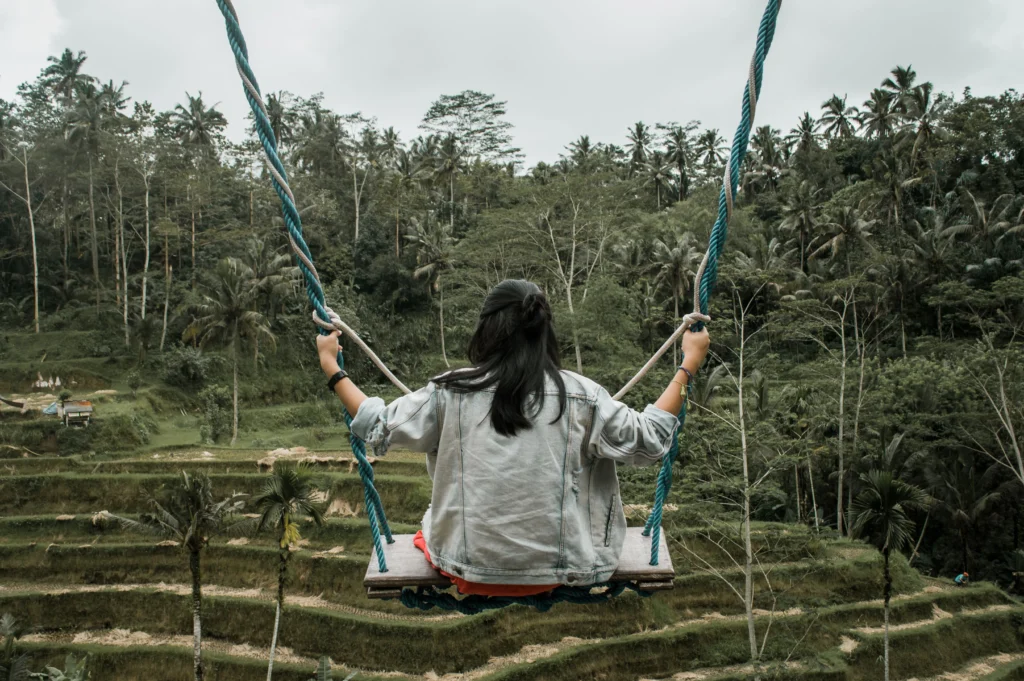
No rice terrace Ubud experience is complete for many visitors without a turn on one of the famous Bali swings at Tegallalang. These giant rope swings launch you out over the terraced valley, with the green paddies and jungle dropping away beneath you — it’s equal parts genuinely thrilling and engineered for an incredible photo.
There are several swing operators in the Tegallalang area, offering swings at different heights and various packages that often include nests, platforms, and props for photos. Prices range from around $10 for a basic single swing up to $35 or more for multi-swing packages with photographers included.
It’s unapologetically touristy, and I’ll own that I did it anyway and had a great time. If you’re going to, go early — the swings get busy and the queues build through the day, eating into both your time and the quality of the light. Wear something that photographs well if that matters to you (the flowing-dress-over-the-valley shot is a Bali classic for a reason), and confirm the safety harness setup looks solid before you commit.
Best Time to Visit
Timing is everything with the Ubud rice terraces, on two levels.
For time of day, early morning wins decisively. Arrive at Tegallalang between 7 and 9 AM for the best light, the coolest temperatures, the thinnest crowds, and the swings before the queues. Late afternoon, an hour or two before sunset, is the second-best window — softer light and the day-trip crowds thinning out. Midday is the worst: harsh overhead sun, peak heat, and maximum crowds.
For time of year, the terraces are green year-round but look their most lush during and just after the wet season (roughly November through April), when the paddies are full and vivid. The rice growing cycle means the terraces look different depending on where they are in the planting-to-harvest process — sometimes brilliant green, sometimes golden near harvest, occasionally flooded and reflective just after planting. All of it is beautiful, just different. The dry season (April to October) offers more reliable weather for visiting and walking.

How to Get There
Tegallalang is about 20 minutes by scooter or car north of central Ubud, an easy and well-signposted trip. There are a few practical ways to do it.
Renting a scooter gives you the most freedom — you can arrive early, stop at the smaller terraces and viewpoints along the way, and leave when you want. Just make sure your travel insurance covers scooter riding and wear a helmet. A car with a driver is the more comfortable option, especially if you’re combining the terraces with other stops, and is affordable in Bali — many visitors hire a driver for a half or full day to cover Tegallalang plus nearby temples and waterfalls.
Guided tours are the easiest hands-off option and often combine the rice terraces with other Ubud highlights into a single well-organized day, with transport included. For the more distant Jatiluwih, a driver or guided tour is the practical choice given the 90-minute journey.
👉 Book a full-day Ubud rice terrace and countryside tour on Viator
What to Bring and Wear
A little preparation makes the rice terrace visit much more comfortable.
Wear comfortable shoes with grip — the paths are uneven, narrow, and can be muddy or slippery, especially after rain or in the morning dew. Sandals with no grip are a recipe for a slip. Bring sunscreen and a hat, because much of the terrace walking is fully exposed with no shade, and the tropical sun is strong even early.
Carry cash in small denominations for the donation points along the paths, the swings, parking, and the cafes — much of the area runs on cash. Bring water, particularly if you’re doing any real walking at Jatiluwih. And if photography is part of the plan, the early morning light is your friend, so prioritize getting there early over almost anything else.
Where to Stay Near the Rice Terraces
If the rice terraces are a major draw for you, consider staying in the countryside north of Ubud rather than in the town center. The Tegallalang corridor has some of Ubud’s most spectacular accommodation — boutique hotels and villas with rice terrace infinity pools and paddy views right outside the room, where you can experience the terraces from your own terrace at dawn before anyone else arrives.
These range from mid-range properties with paddy views around $100–$150 a night up to luxury rice terrace resorts well above that. The trade-off is distance from the restaurants and walkability of central Ubud, so it suits a stay focused on landscape and relaxation. For a first visit balancing the terraces with the town, staying in central Ubud or Penestanan and visiting the terraces early in the morning works well — our full where to stay in Ubud and best hotels in Ubud guides break down every area.
👉 Find rice terrace view hotels near Ubud on Hotels.com
My Personal Rice Terrace Tips
After more rice terrace mornings than I can count, here’s what actually makes the difference.
Go at dawn or don’t bother with Tegallalang. I mean this genuinely — the same terrace that feels magical at 7:30 AM feels like a theme park queue at 11. Set the alarm, get there early, and you’ll have one of the best mornings of your trip. Arrive late and you’ll wonder what the fuss was about.
For real peace, make the trip to Jatiluwih. It’s further and takes more of your day, but the scale and the quiet are a completely different experience from Tegallalang. If you want to walk through rice terraces rather than photograph them over other people’s heads, this is where to go.
Do the swing if you want to, without guilt. It’s touristy and it’s fun and the photo is genuinely great. Go early to beat the queues, and just enjoy it for what it is.
Bring cash and grippy shoes. The two things people most often forget, and the two things that most reliably cause friction — a slip on a wet path or being caught short at a cash-only donation point.
Pair the terraces with a temple or waterfall. A driver for the morning can easily combine Tegallalang with Tirta Empul temple or a nearby waterfall, making a full, varied day out of it. Our things to do in Ubud guide has the best combinations.
👉 Book Ubud rice terrace tours, swings, and countryside trips on Viator