The Ultimate Uluwatu Travel Guide: Things to Do, Beaches, and Why the Sunset Will Ruin You
This post contains affiliate links. If you book through them, we earn a small commission at no extra cost to you.
Why Uluwatu Is Different
Four trips to Uluwatu and I still haven’t figured the place out. Every time I think I have, I find a staircase going down into the cliff that wasn’t on any map, or I end up eating grilled fish at a warung with no name and no sign, watching the sun disappear into the ocean from a plastic chair, and I realize I’ve been wrong about what this place is the whole time.
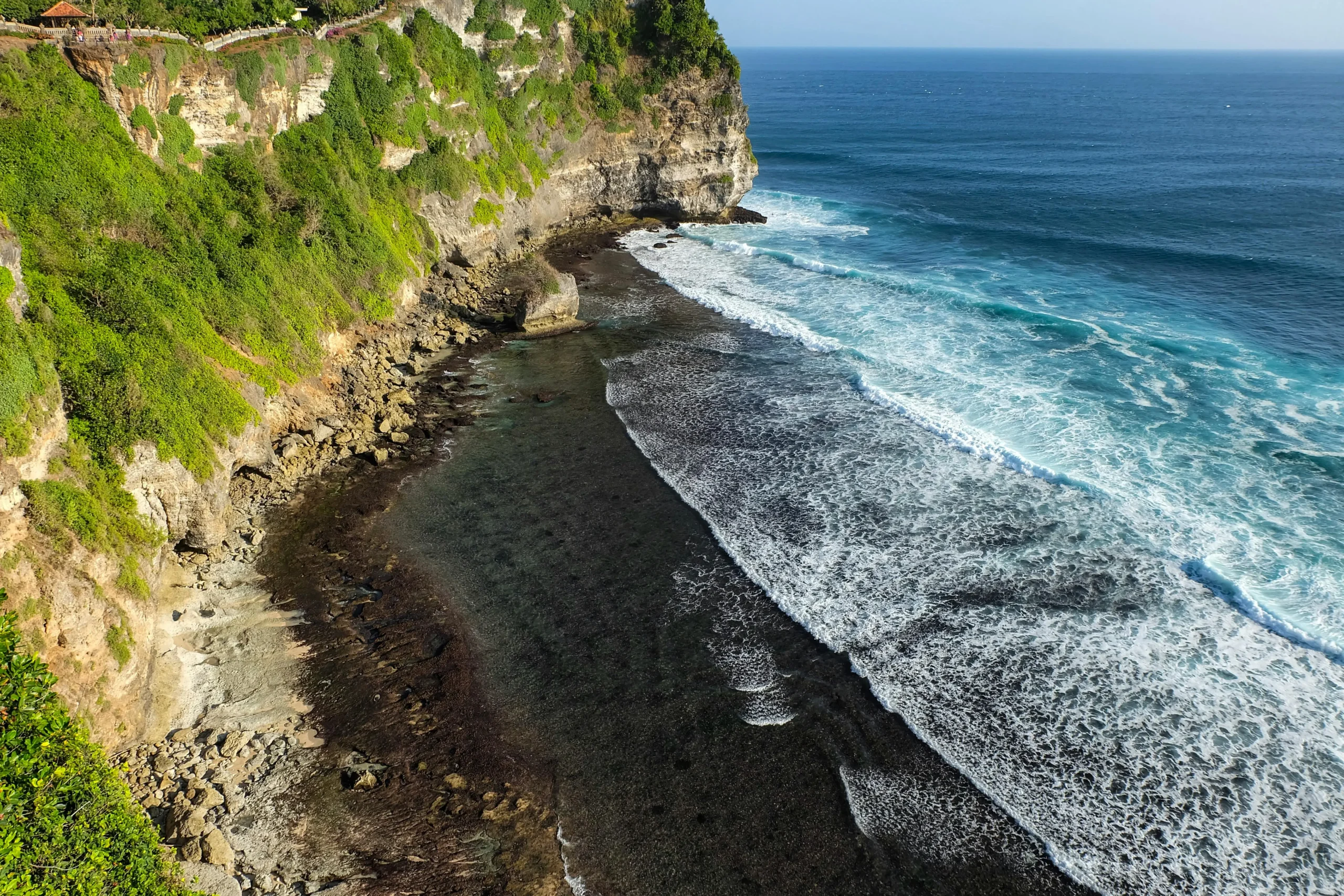
It sits at the southern tip of the Bukit Peninsula about 45 minutes from Seminyak, more if the traffic on Bypass Ngurah Rai is having a bad day, which it often is. It doesn’t have Seminyak’s restaurant scene or Ubud’s temple culture. What it has are limestone cliffs that drop straight into the Indian Ocean, surf breaks that serious wave riders plan entire trips around, beaches that require a real commitment to reach, and a clifftop temple where the sunset does things to you that are genuinely difficult to describe without sounding dramatic.
This guide covers the Uluwatu travel guide & things to do in Uluwatu that are actually worth your time. The temple, the Kecak dance, the beaches worth the staircase, where to eat, where to sleep, and the things I’ve learned across four visits that would have been useful before the first one.
Things to Do in Uluwatu
Visit Pura Luhur Uluwatu at Sunset
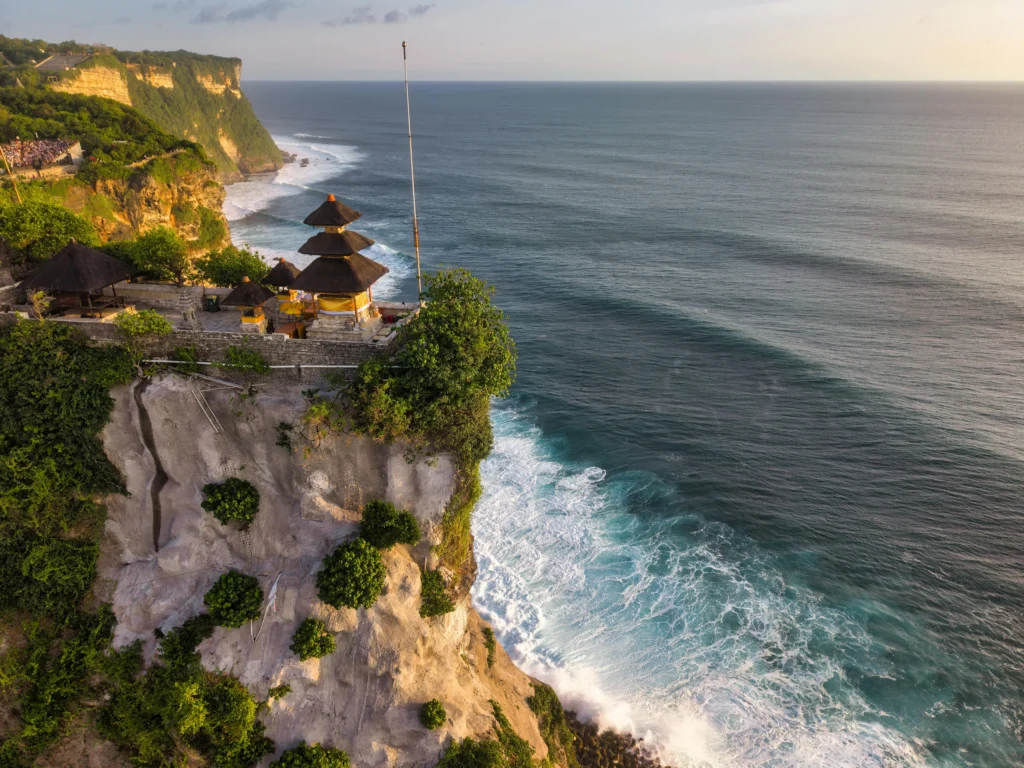
Pura Luhur Uluwatu has been standing on this cliff since the 11th century, about 70 meters above the Indian Ocean, and it shows no signs of being less impressive than it was before tourism discovered it. The cliff drops vertically into the water below. The temple spreads across the headland in a way that feels deliberately placed for maximum effect. Late afternoon light turns the whole thing golden in a way that makes you stand still without deciding to.
I’ve arrived here at different times across different visits. Morning is worth doing once — quiet, atmospheric, the kind of hour where you have the outer courtyards mostly to yourself. But 4:30 PM is when Uluwatu earns its reputation. The crowds are real and they don’t matter.
The monkeys are also real. They took my sunglasses on my second visit — clean off my face, gone before I registered what had happened. The monkey in question sat about three meters away and looked at me with complete indifference. Keep your belongings inside your bag, not in your hands or on your head.
Sarong rental at the entrance costs almost nothing. Entry is around $3 USD. Budget at least an hour, more if you’re staying for the dance.
Watch the Kecak Fire Dance
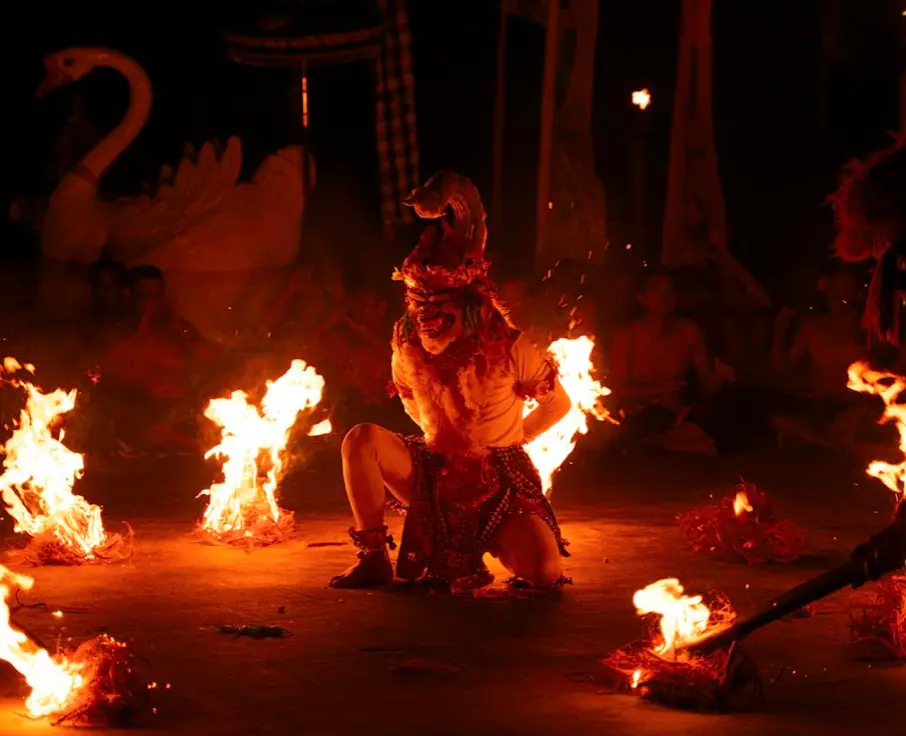
The clifftop amphitheater at Uluwatu runs a Kecak performance every evening at sunset. Dozens of men form a circle and chant — a rising, falling, interlocking rhythm with no instruments — while dancers in elaborate costume work through scenes from the Ramayana. Fire comes into it. The ocean sits behind the stage. The sun goes down behind all of it.
I’d seen Kecak before Uluwatu, in Ubud and at a smaller venue near Seminyak. None of it prepared me for what the setting here does to the performance. When the sun actually hits the horizon there’s a moment where the entire audience stops talking. Nobody organizes this. It just happens, every evening, because the light and the sound and the location do something to a crowd that normal performances don’t.
Tickets run about $15 USD. They sell out, particularly in July and August. Book before you leave your accommodation — not at the gate, not on the walk over.
👉 Book the Uluwatu Kecak Dance and sunset tour on Viator
Walk the Cliff Paths
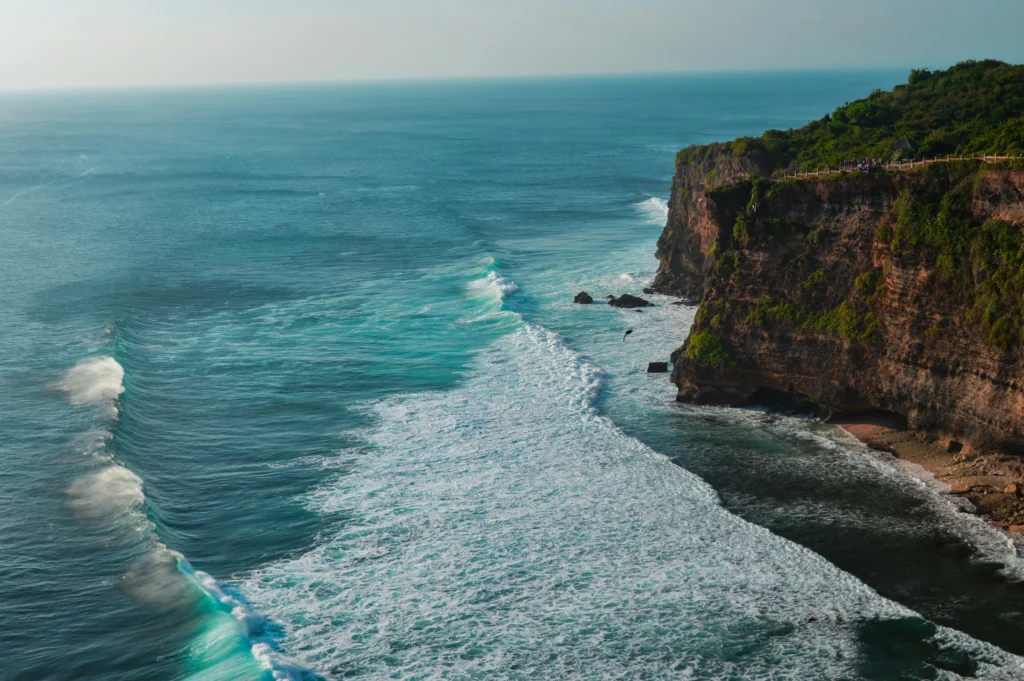
The coastline around Uluwatu is cut through with staircases — some official, some worn into the rock by locals over years, some that look like they haven’t been used since someone tried them and thought better of it. I’ve spent entire mornings walking these paths with nowhere specific to be, turning down staircases to see where they end up.
Some go nowhere useful — a ledge above a surf break, a fishing spot, a view you couldn’t have predicted from the top. Some connect to beaches. The point isn’t the destination. Wear shoes that grip, bring more water than you think you need, and skip any staircase that looks genuinely unstable.
Surf or Watch People Who Can
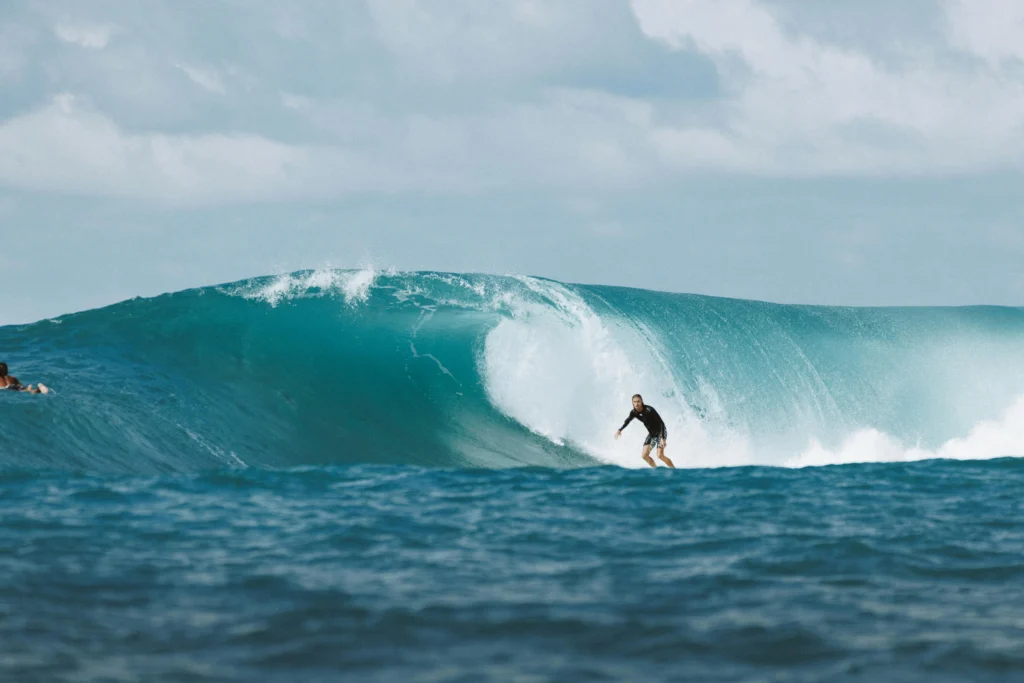
The breaks around Uluwatu are mostly intermediate to advanced — reef breaks that require some experience and a reasonable amount of respect. There are beginner lessons available in the area, but if you’ve never surfed before, Seminyak’s beach break is a more forgiving place to start.
That said, you don’t need to surf to get something out of Uluwatu’s surf scene. Watching experienced surfers on the main Uluwatu break from the cliffs above — the drop, the long wall, the exit through the cave — is worth an hour of anyone’s afternoon.
The daily rhythm here builds around morning sessions in the water and afternoons recovering or doing yoga, and even as an observer it has a way of pulling you into its pace.
👉 Book a surf lesson at Uluwatu on Viator
Ride the Bukit Peninsula
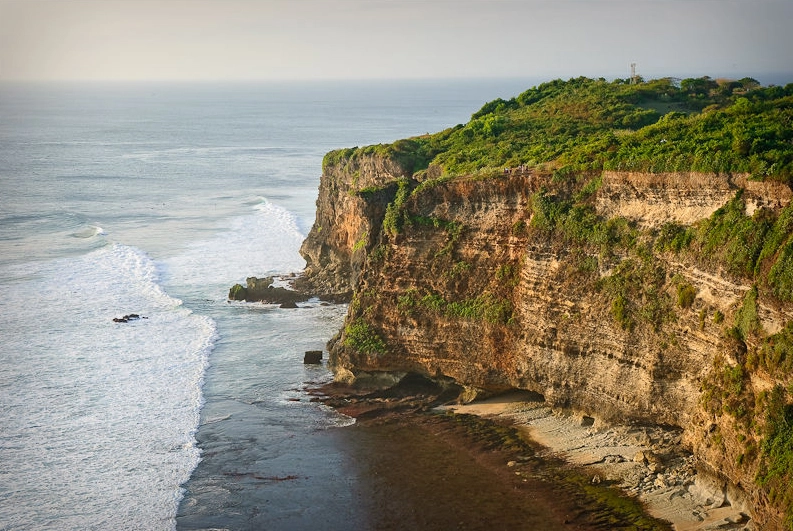
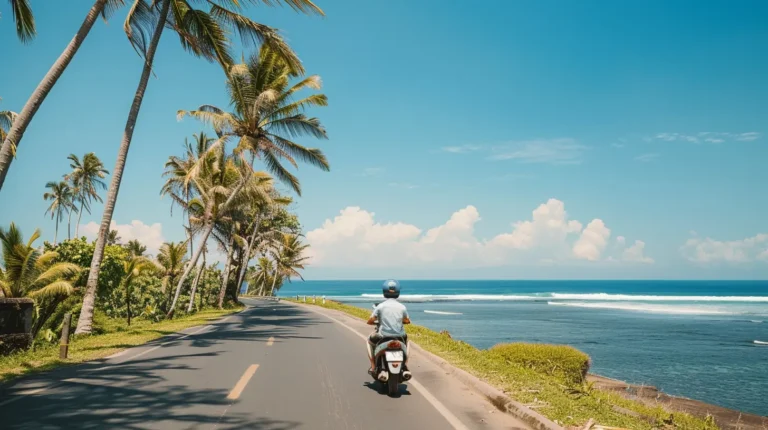
Renting a scooter for a day and riding the Bukit roads is one of the better ways to understand what makes this part of Bali different from everywhere else. The landscape is drier and more exposed than the rest of the island — low scrub, limestone outcrops, sudden ocean views appearing at the end of side roads that look like they go nowhere.
Padang Padang, Bingin, and Dreamland are all reachable in an afternoon. The viewpoints worth stopping at are mostly unmarked. Stop when something looks worth stopping for. The best things I’ve found on the Bukit weren’t on any list.
Best Beaches in Uluwatu
Padang Padang Beach
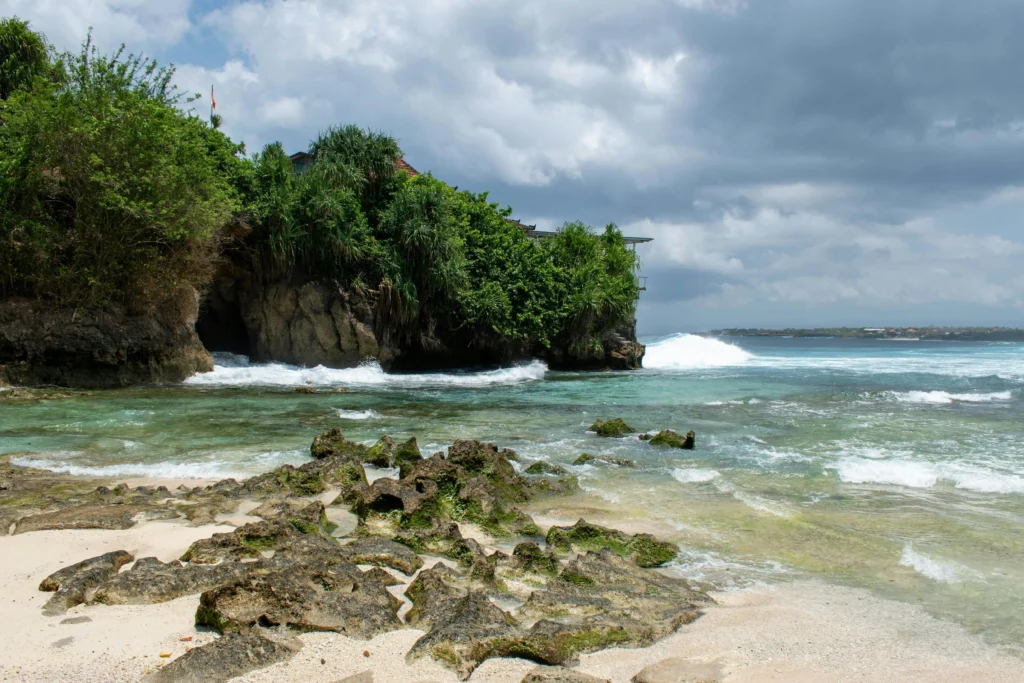
The most visited beach on the peninsula, which tells you to go early. Before 9 AM the staircase down through the rock is quiet and the beach feels like it belongs to the few people already there. By late morning it’s a steady stream.
The beach is narrow — a crescent of sand between two cliff faces — and the water is clear when the surf isn’t running too heavy. Warungs at the top sell drinks and food. Getting down requires a long staircase through a natural gap in the limestone, which is straightforward but worth wearing actual footwear for.
Bingin Beach
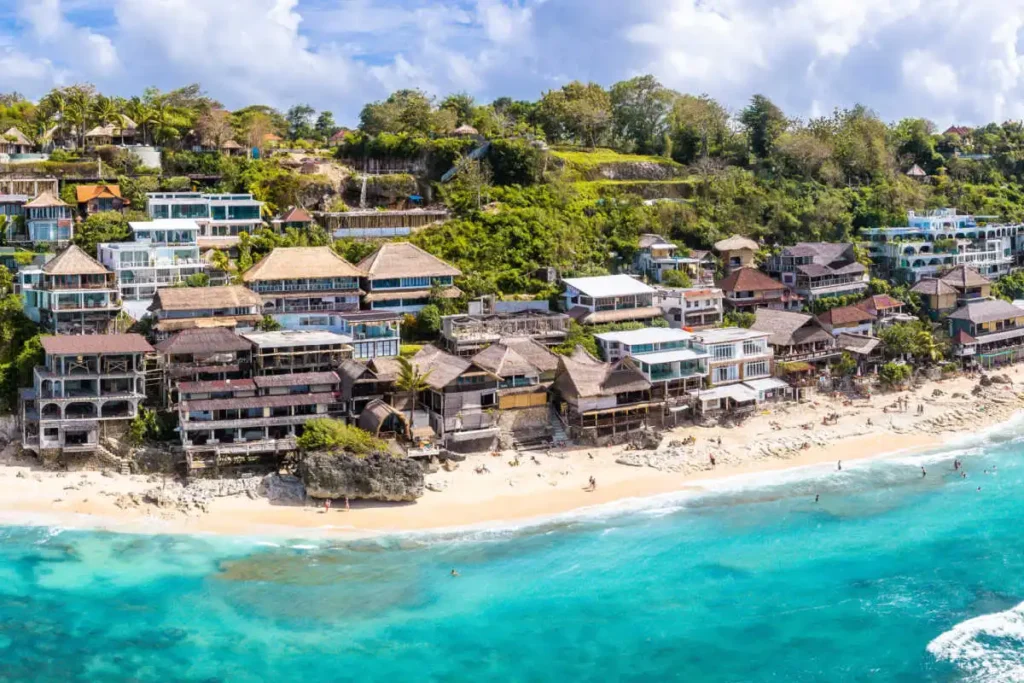
My favorite beach on the Bukit, by some distance. The descent is steep and long and your legs will feel it on the way back up. What’s waiting at the bottom makes that math work out.
Small beach, cliff warungs and guesthouses built right into the rock face above it, a surf break offshore that’s worth watching for hours if you’re not in the water. The afternoon light does something specific here — the angle of the cliffs catches it in a way that makes the whole place feel warmer and more golden than it should be at that hour. I’ve sat at one of those cliff warungs until well past the time I meant to leave, more than once.
Order whatever’s fresh. Watch the water. Don’t rush out.
Dreamland Beach
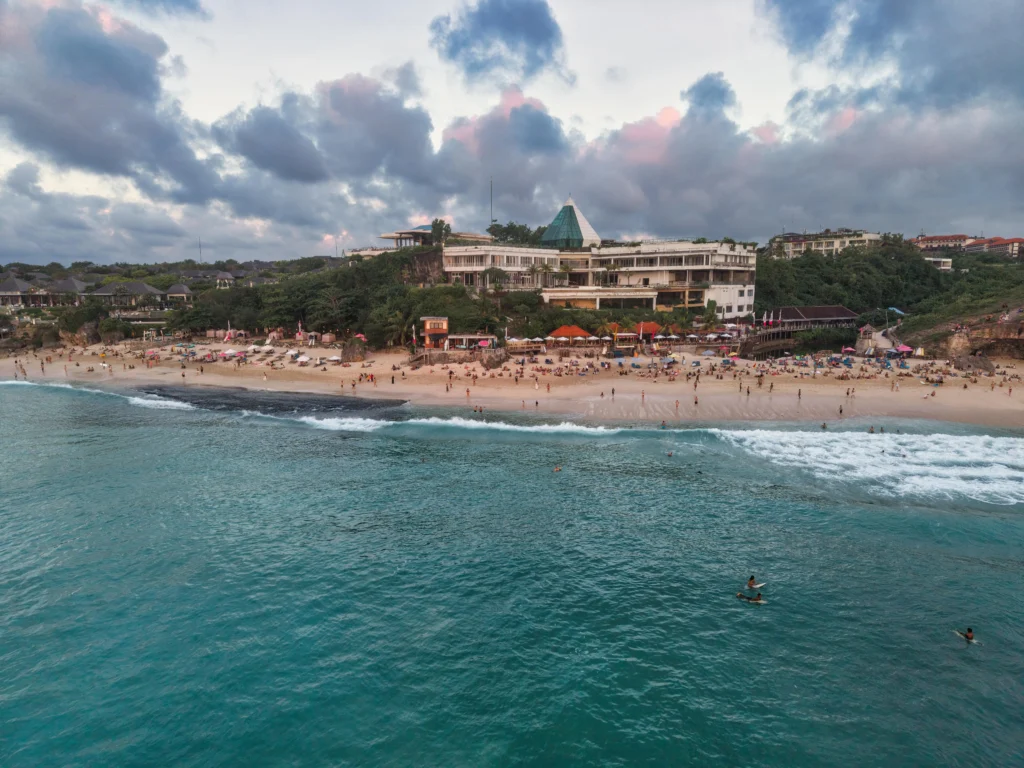
Wider, flatter, and more accessible than Bingin or Padang Padang, which is exactly why it works well for families or anyone who wants a beach day that doesn’t involve a serious staircase. The waves suit intermediate surfers on a moderate swell. There’s more space to spread out. It’s less dramatic than the other beaches on this list, but sometimes less dramatic is what you actually want.
Suluban Beach (Blue Point)
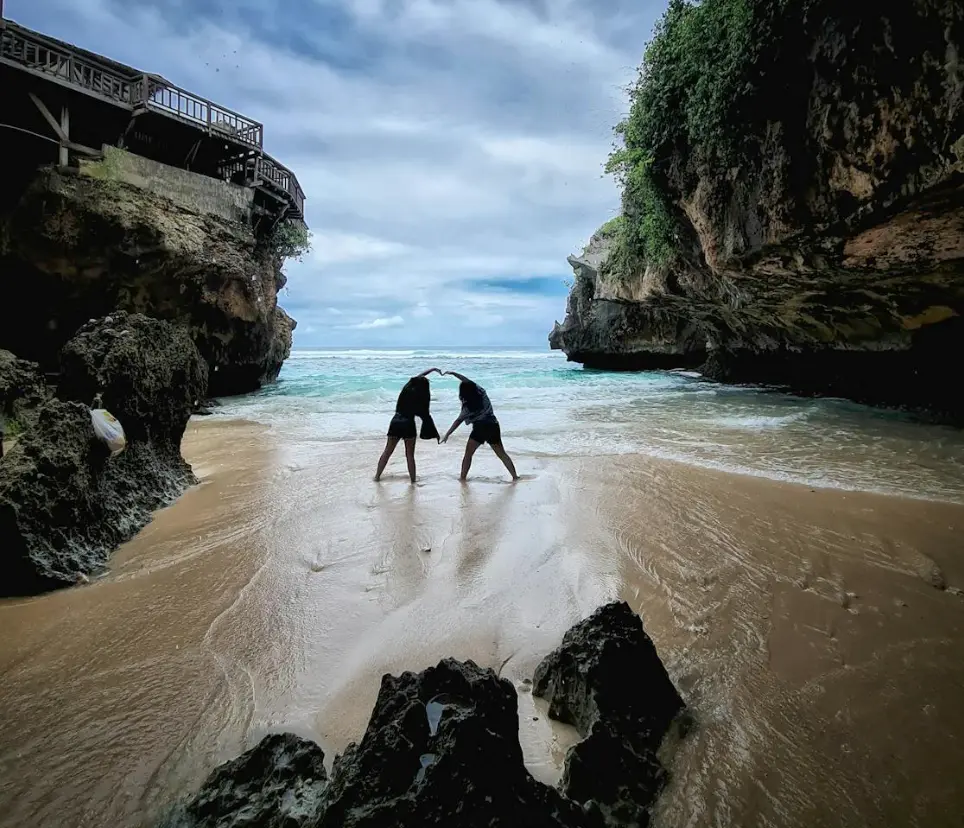
Getting to Suluban means walking through a network of cave-like passages cut into the base of the cliffs — low ceilings, dim light, the sound of the ocean getting louder as you go. It’s a strange approach for a beach and that strangeness is part of what makes it memorable.
The beach is small and the surf that breaks here — the main Uluwatu break — is powerful and not for beginners. But the setting, the cave walls, the sight of surfers paddling out through the channel, is unlike anything else on the peninsula.
Surfing in Uluwatu
The main Uluwatu break is a long left-hander over a reef, capable of holding serious size in a good swell. It’s one of the most famous waves in the world for reasons that become obvious the moment you watch it from the cliffs. Not a beginner wave by any stretch.
Padang Padang runs shorter and harder — a powerful, shallow reef break that hosted international competitions for years. Bingin is more workable on a smaller swell and is where I’ve watched intermediate surfers successfully navigate a reef break for the first time. Impossibles is a long, connecting wave that rewards surfers who can read sections and link them together, best in a moderate swell without too much size.
If you surf at an advanced level, you already know what to do here. If you’re learning, take a lesson at a beach with a sand bottom first and come back to Uluwatu when you’re ready for reef.
👉 Book a surf experience at Uluwatu on Viator
Where to Eat and Drink
Single Fin sits directly above the Uluwatu surf break, and the view from the terrace — surfers below, ocean going to the horizon — is one of the better places to sit in Bali full stop. The food holds up, the drinks are fairly priced, and Sunday afternoons here draw the whole Bukit community into something that starts as lunch and ends when people stop feeling like leaving. I’ve been twice. I’d go back without much persuasion.
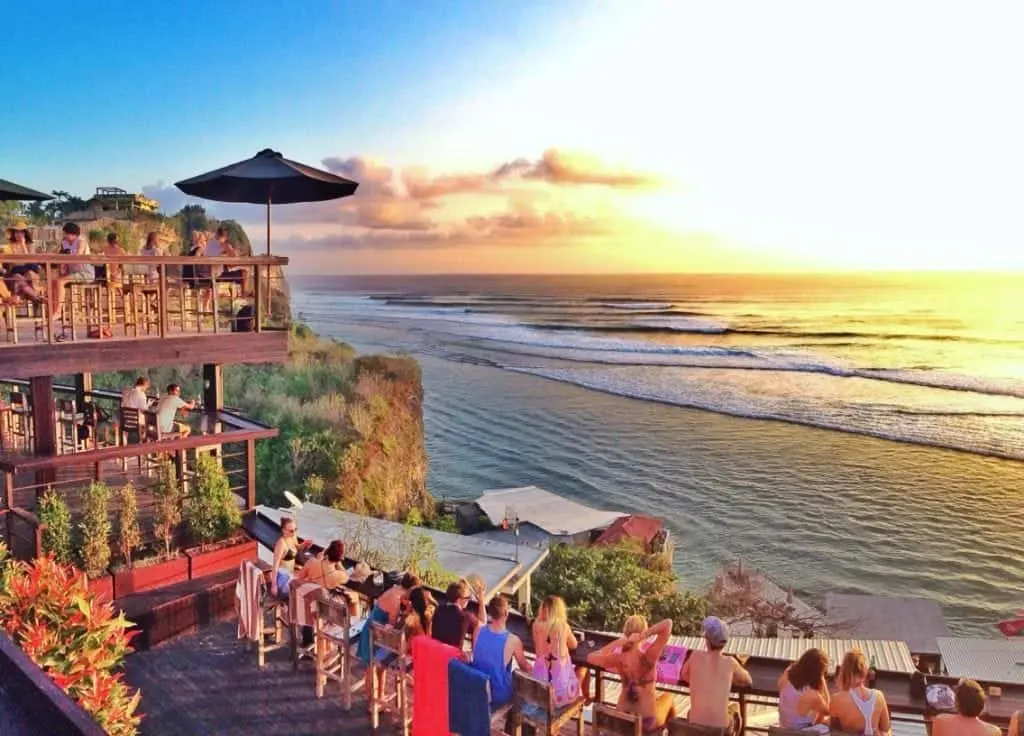
Most of my meals in Uluwatu happen at the warungs around Bingin and Padang Padang. Fresh fish, rice, whatever’s been cooked that morning, eaten outside for the same price as eating inside with a wall in front of you. The best meal I’ve had in this part of Bali was grilled snapper at a place in Bingin with no name on the door, ordered by pointing at the fish laid out on ice. I paid with coins from the bottom of my bag. I’ve thought about that meal more than once since.
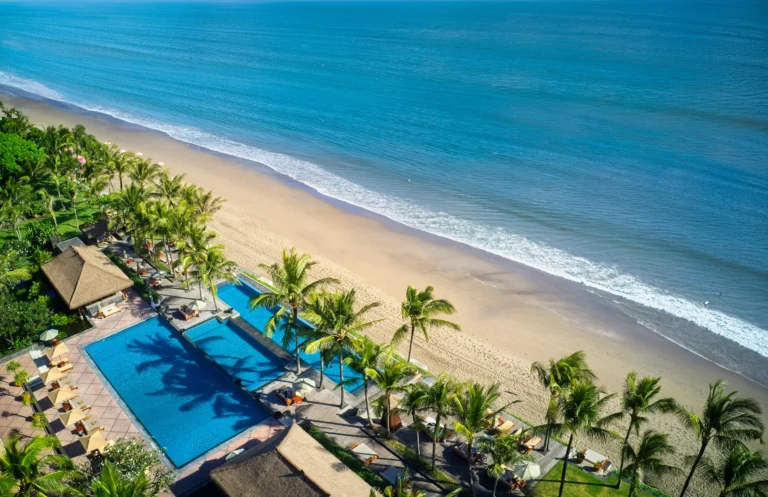
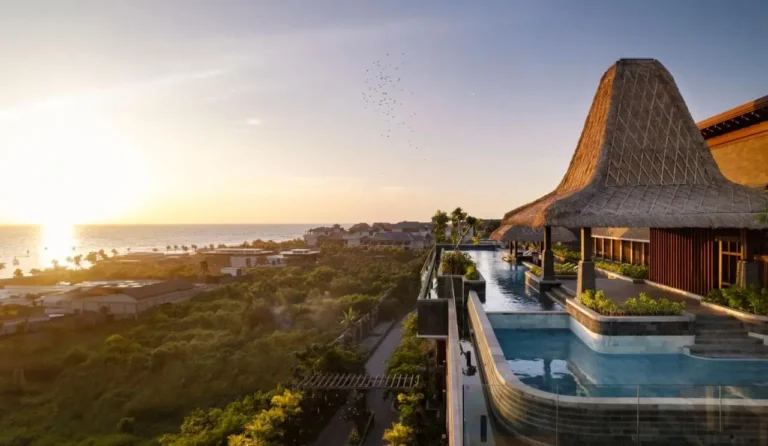
Ulu Cliffhouse is the splurge option — infinity pool, cliff-edge setting, food that’s a notch above the warung standard. Not somewhere I eat every day when I’m here, but the right place for a long afternoon when you want something other than plastic chairs and a view.

Where to Stay in Uluwatu
Most accommodation clusters around Bingin, Padang Padang, and the clifftop strip near the temple. Bingin is where I stay when I’m here for more than a night — close to the beach, quieter than the clifftop, the kind of neighborhood pace that makes mornings feel slow in a good way.
Budget rooms start around $20–$35 a night in Bingin, usually simple and clean with views that would be priced very differently anywhere in Europe. Mid-range villa rooms or cliff-side properties run $60–$100. Further up the Bukit, private villa compounds with pools go for $150–$250 — good value for the seclusion and the setting.
Coming for a day trip is fine, but one night changes what Uluwatu is. After the day-trippers head back to Seminyak and the Kecak crowd disperses, the place settles into something quieter and more itself. Worth sleeping through at least once.
👉 Browse hotels and villas in Uluwatu on Booking.com 👉 Compare Uluwatu accommodation on Agoda
Getting to Uluwatu
About 45 minutes from Seminyak, an hour from Ubud, traffic dependent — and traffic in Bali is always a factor worth building time around.
A scooter gives you the most flexibility on the Bukit roads. The best spots up here aren’t always signposted, and being able to pull over when something looks worth stopping for matters. Check your travel insurance covers scooter riding before you rent one. Wear a helmet every time, not just when you remember.
Grab works to and from Uluwatu, but the 7 PM surge after the Kecak dance is real — every tourist at the temple is trying to leave at the same time and prices reflect that. If you’re doing the temple and the dance as a day trip, arrange a return driver through your accommodation before you go rather than trying to sort it out at the gate afterward.
Guided day tours from Seminyak and Ubud that include transport are often the most practical option for a first visit. They handle the logistics and let you focus on the place.
👉 Book an Uluwatu temple and Kecak dance tour on Viator
For more on getting around Bali, the complete Bali travel guide covers transport in detail. The Ubud travel guide and Seminyak travel guide are worth reading if you’re splitting time between the south and the highlands.
Sara’s Tips for Visiting Uluwatu
Things I know now that I didn’t know before trip one.
Get to the temple by 4:30 PM. The walk through the grounds takes longer than it looks on a map, the light starts changing fast after 5, and arriving at 5:10 and rushing through is a specific regret I carry from my first visit.
Buy your Kecak tickets before you leave your accommodation that morning. The online options hold longer than the gate windows, and “I’ll sort it when I get there” is a plan that fails regularly in peak season. Standing outside the amphitheater listening to the chanting through a wall is a bad trade-off for not spending 10 minutes booking ahead.
Bingin on a weekday before 9 AM is a different beach from Bingin at noon. If your schedule allows it, go early and stay for breakfast at one of the cliff warungs before the beach fills up.
Carry cash. Parking, sarong rental, warungs, the woman selling cold coconuts at the top of the Bingin stairs — almost none of it takes cards, and the ATMs aren’t always where you need them.
Stay one night. The day trip version of Uluwatu is real and worth doing, but it’s the surface. The morning after, when the cliff paths are quiet and the water is glassy and the only people on the beach got up before 7, is when the place makes actual sense.
👉 Find top-rated Uluwatu experiences on Viator