

Bali Entry Requirements for US Citizens: What You Actually Need to Know
Introduction
Getting into Bali as an American isn’t complicated. There’s no embassy appointment, no visa application weeks in advance, no thick folder of supporting documents. Most people handle their Bali entry requirements in a single sitting — maybe 20 minutes online — and everything else gets sorted at the airport.
What trips people up is the stuff that’s changed recently. A tourist levy that didn’t exist two years ago. A mandatory digital declaration form introduced in late 2025. A few customs rules that are easy to overlook until you’re standing in front of an immigration officer. None of it is difficult, but arriving without knowing about it can slow you down or cost you money on day one.
This guide covers the full picture: visa, passport rules, fees, forms, customs, and what actually happens when you land. Get these sorted before you fly and arrival becomes the least stressful part of the trip.
Heads up: Entry rules change. Double-check the current requirements at the official Indonesian immigration website and the US Embassy in Jakarta before you travel — especially if you’re reading this more than a few months after it was published.
Do US Citizens Need a Visa for Bali?
Yes but it’s not the kind of visa that requires any advance planning. US citizens aren’t eligible for visa-free entry into Indonesia, but the Visa on Arrival (VOA) is available to Americans either at the airport or online before departure. It covers tourism, family visits, and transit. It does not cover any form of paid work, including remote work.
For a trip of 30 days or less, the VOA is all you need.
Planning to stay longer, or thinking about working remotely while you’re there? The B211A Single Entry Tourist Visa is worth looking into before you travel. It requires applying through the Indonesian consulate in the US and comes with more paperwork, but it’s the right tool for longer stays. That’s a separate process from what’s covered here.
Visa on Arrival (VOA): How It Works
The VOA gives you 30 days in Indonesia. It can be extended once for another 30 days if you want to stay longer — more on that further down.
Cost: IDR 500,000, roughly $35 USD. You pay at the airport after landing at Ngurah Rai International Airport (DPS).
At the airport, the process runs in a specific order: you join the VOA payment queue first, pay the fee, collect your receipt, then move on to the main immigration counter for your passport stamp. Cash in IDR or USD works at most counters, but card acceptance isn’t guaranteed — bring cash just in case.
One thing worth knowing: some airlines ask for proof of visa at check-in before your departure flight. If you show up at the gate without any visa documentation, the airline may not let you board. This is why most regular Bali travelers skip the airport queue entirely and apply for the e-VOA online instead.
e-VOA: Apply Online Before You Fly
The e-VOA is the same 30-day visa, same $35 fee, applied for online before your trip so you arrive with it already sorted. Processing takes 1–3 working days in most cases. Apply at least a week before your flight — not the night before.
The official application portal is molina.imigrasi.go.id. You’ll need your passport details, a passport-style photo, proof of a return or onward ticket, and a card for payment.
Once approved, save the confirmation digitally and keep a printed copy too. Airport systems occasionally have glitches, and having a paper backup takes about 30 seconds and could save you a significant headache.
Kids travel separately on this: each child needs their own passport and their own e-VOA at the same cost as adults.
Passport Requirements
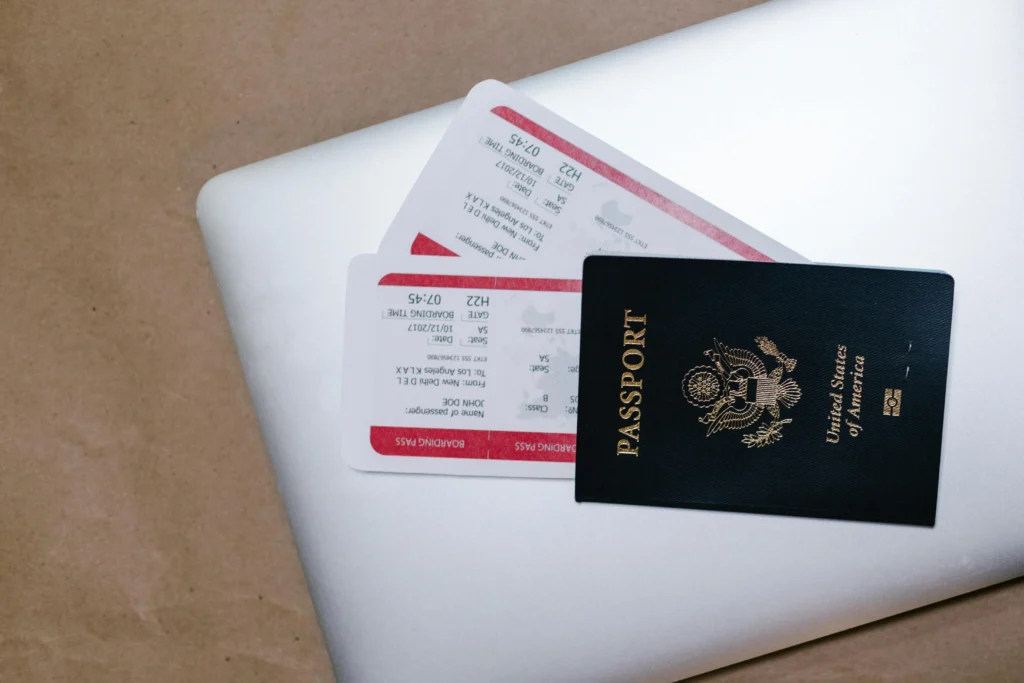
Your passport needs at least 6 months of validity from the date you arrive in Bali. Not 6 months from today — 6 months from the day you land. If you’re cutting it close, renew before you book flights.
You also need at least one blank page for the visa stamp. Immigration officers won’t stamp a full passport, and they’ve turned travelers away for it. If your passport is getting full, treat it the same as one that’s expiring: get a new one before you go.
A few other things to handle before departure: make sure your name on the passport matches your ticket exactly, photograph the ID page and keep that photo somewhere accessible, and consider signing up for the US STEP program (Smart Traveler Enrollment Program). It’s free, takes five minutes, and means the embassy can reach you if something goes wrong in-country.
The Bali Tourist Tax (Levy)

This is the one that catches people off guard the most. Since February 2024, every international visitor to Bali has been required to pay a tourist levy of IDR 150,000 — about $10 USD — per person, per entry. It applies regardless of age, so yes, your kids pay too.
It’s not per night. It’s a one-time fee for each time you enter Bali. Leave and come back, you pay again.
The money funds cultural preservation and environmental programs across the island. Whether you think that’s a good use of $10 is beside the point — it’s mandatory, enforcement has been increasing, and skipping it creates problems at the airport.
Pay online before you fly at lovebali.baliprov.go.id — that’s the only legitimate platform. You’ll enter your passport number, name as it appears in your passport, email, and arrival date. The process takes a few minutes and you’ll get a confirmation to show at the airport.
A word of caution: scam websites mimicking the Love Bali portal have been circulating, usually charging inflated fees. If a site is asking for more than IDR 150,000 and isn’t lovebali.baliprov.go.id, it’s not legitimate.
The All Indonesia Declaration Form
As of October 2025, the ‘All Indonesia’ digital declaration card is mandatory at Bali’s airport. It replaced the separate health and customs forms that used to be handed out on the plane or at the terminal.
Fill it out before you land, not while you’re standing in the immigration hall. You’ll answer basic questions about your health, what you’re bringing into the country, and your contact details. The whole thing takes about five minutes and gives you a QR code to show at arrival.
No COVID vaccination proof is required to enter Indonesia as of 2025.
Customs Rules: What You Can and Can’t Bring

Indonesian customs are strict in specific areas. The standard duty-free allowances coming in: 1 liter of alcohol, 200 cigarettes or 25 cigars or 100g of tobacco, and up to IDR 100 million in cash (roughly $6,500 USD) without declaration.
The areas where travelers get into serious trouble:
Drugs. Indonesia’s drug laws are among the strictest in the world. Penalties for narcotics range from long mandatory prison sentences to the death penalty. This is not a country where “I didn’t know” is a useful defense. Don’t bring anything.
Prescription medication. Carry it in the original packaging with a doctor’s note. Certain medications that are legal in the US are controlled substances in Indonesia — if you’re on anything unusual, check before you travel.
Drones. Technically allowed but require permits from Indonesia’s civil aviation authority (DGCA). The rules around where you can fly are also tightly regulated near temples and government buildings. If you’re a photographer planning to bring a drone, research the current permit process well before your trip.
Fresh produce and plants are also restricted under agricultural import rules — generally not an issue for most travelers, but don’t pack fruit in your checked bag.
What Happens at the Airport

Ngurah Rai International Airport (DPS) handles international arrivals through a sequence of checkpoints. If you’ve done your prep, most of these are quick.
The order runs roughly like this: declaration QR code check, tourist levy verification (screenshot from Love Bali works fine), VOA payment counter if you didn’t pre-apply, immigration for your passport stamp and biometrics, baggage collection, then customs.
If you land with your e-VOA already approved, levy paid, and declaration form complete, you skip two of those stops and move straight to immigration. For a lot of travelers, that’s the difference between 20 minutes and 90 minutes in processing queues — especially during peak arrival periods.
ATMs are in the arrivals hall, but airport exchange rates are poor. Arrive with some USD or IDR cash on you. Not a huge amount — just enough to cover any unexpected fees or a taxi before you find a better ATM in town.
Extending Your Stay Beyond 30 Days
The VOA can be extended once, for another 30 days, bringing the total to 60 days maximum. The extension costs another IDR 500,000 (~$35 USD) and in many cases requires an in-person visit to an immigration office. The Denpasar office handles most Bali extensions.
Don’t leave this to the last few days. Start the extension process with at least a week to spare — the offices can be slow, and you don’t want to be scrambling while your visa ticks down.
Overstaying is genuinely not worth it. The fine is IDR 1,000,000 per day, and beyond the money, overstaying can result in being banned from re-entering Indonesia. It’s not a grey area — immigration keeps records.
For anything beyond 60 days, look into the B211A visa before you leave the US. It needs to be arranged through the Indonesian consulate, not handled once you’re already on the island.
Travel Insurance for Bali
Travel insurance isn’t required to enter Bali, but the reasons to have it are practical rather than bureaucratic. Medical care on the island runs the full spectrum — BIMC Hospital and Siloam are well-regarded private facilities, but serious emergencies sometimes require evacuation to Singapore, which can run $30,000–$50,000 USD out of pocket.
Two options worth looking at for US travelers:
👉 SafetyWing works on a monthly subscription model, which makes it good for longer trips or anyone who travels frequently. It covers medical expenses and emergency evacuation and is significantly cheaper than most traditional travel insurance.
👉 World Nomads is better suited to shorter trips and covers adventure activities by default — surfing, trekking, rafting — which a lot of basic policies exclude. Worth checking if your Bali plans involve anything more active than beach time.
Read the policy before you buy, not after something goes wrong. Scooter accidents are common in Bali, and some policies require a valid local license to cover them.
Where to Stay After You Arrive
Bali’s main areas are genuinely different from each other — picking the right base matters more here than in most destinations.
Seminyak and Canggu are where most beach and nightlife-oriented travelers end up. Ubud sits in the highlands and is better for culture, temples, and slowing down — our Ubud travel guide covers it in detail. Uluwatu is quieter, clifftop, and draws serious surfers. Nusa Dua is the resort corridor — good for families and people who want calm water and a more structured experience.
👉 Browse hotels in Bali on Booking.com 👉 Compare Bali villas and hotels on Agoda
Book your first night or two before you arrive, especially if you’re landing at night. Sorting accommodation at the airport after a long flight is nobody’s idea of a good start.
Final Pre-Trip Checklist
Run through this before your departure date:
- Passport valid for 6+ months from arrival date, at least 1 blank page
- e-VOA applied and confirmed at molina.imigrasi.go.id
- Bali tourist levy paid at lovebali.baliprov.go.id
- All Indonesia Declaration Form completed, QR code saved to phone
- Return or onward ticket booked
- Travel insurance sorted and policy details accessible
- Some USD or IDR cash on hand for arrival
- First night accommodation confirmed
That’s the full list. Get those done and the entry process is genuinely straightforward. Bali’s immigration is well-organized for tourists — the only people who have a rough time at the airport are the ones who showed up without the paperwork.